National NORML Board of Directors Endorses Denver Social Use Ballot Initiative 300

Legalize marijuanaMeeting at our board meeting in Boston this past Friday, held in conjunction with the Boston Freedom Rally, the national NORML board of Directors endorsed Denver Social Use Initiative 300, the Neighborhood-Supported Cannabis Consumption Pilot Program.

Under current law, marijuana can be legally smoked only in a private home, or in one of only a few marijuana-friendly hotels in the state. Most tourists and many renters have no place where they can legally consume marijuana that they legally buy in Colorado. This is not a realistic situation, and will continue to result in many people smoking in public, which is not legal in Colorado, and can result in stiff fines.

Two Competing Social Use Initiatives

There were initially two competing social use initiative being circulated in Denver. Denver NORML and Responsible Use Denver were circulating petitions for an initiative that would have allowed marijuana-only lounges and special use permits to be issued, and frankly, it was in my perspective the preferred proposal. It would have provided Amsterdam-like lounges where marijuana smokers could socialize with their marijuana smoking friends outside a private home, and it would have provided for special permits for 420 and similar events where marijuana smoking would have been legal.

And most importantly, it would not have permitted alcohol sales in the marijuana lounges, an attempt to avoid the problems often faced when alcohol drinkers imbibe too heavily, getting in fights and otherwise engendering violent and aggressive behavior. As marijuana smokers, we did not want to be blamed for these all-too-familiar alcohol-related problems.

But despite a valiant effort by Jordan Person and Judd Golden and Denver NORML supporters, the petition failed to gather a sufficient number of signatures of registered voters. It was a true grassroots effort, and Denver NORML will likely be back with another effort in the future.

Initiative 300

An industry-backed and funded effort, Initiative 300, did make the ballot with a proposal that would permit certain bars and lounges to apply for a license that would permit marijuana edibles in restricted areas, and perhaps vaporization (although city authorities have questioned whether this would be permissible under current state law). But to obtain such a license, the applicant would first have to obtain the approval of a neighborhood advisory council, a requirement that is not likely to be met by many applicants.

Nonetheless, any proposal that recognizes the need for responsible marijuana smokers to be allowed to use marijuana outside a private home is a step in the right direction, and thus this initiative, with all of its shortcomings, still deserves our support.

So all Denver marijuana smokers need to get behind this city-wide voter initiative, and let’s continue to push the envelope until we achieve a policy that treats responsible marijuana fairly in all respects, including job discrimination, child custody issues; driving under the influence of drugs, and the right to socialize with other marijuana smokers in a public setting outside the home where we are permitted to smoke marijuana.


NORML Blog, Marijuana Law Reform

Categories: Hemp History | Tags: , , , , , , , , | Leave a comment

NORML’s Legislative Round Up September 23rd, 2016

thumbs_upNext Tuesday is National Voter Registration Day and NORML will be releasing an updated and revised 2016 Congressional Scorecard. The Scorecard is an all-encompassing database that assigns a letter grade ‘A’ through ‘F’ to members of Congress based on their marijuana-related comments and voting records.

With the 2016 presidential election drawing closer and statewide marijuana initiatives qualified for the ballot in nine states, we need YOU to make it out to the polls to support ending cannabis prohibition. Join us in celebrating National Voter Registration Day next Tuesday by double-checking your status as a voter and encouraging your friends and family to do the same. Take a look at how we graded your members of Congress and bring that information with you to the polls on Election Day!

State:

California: Sixty percent of likely voters say they would vote for Proposition 64: the Adult Use of Marijuana Act according to the latest poll out of the Public Policy Institute of California (PPIC). Only 36 percent of voters said they are against the pending ballot initiative.

Proposition 64 permits adults to legally grow (up to six plants) and possess personal use quantities of cannabis (up to one ounce of flower and/or up to eight grams of concentrate) while also licensing commercial cannabis production and retail sales. The measure prohibits localities from taking actions to infringe upon adults’ ability to possess and cultivate cannabis for non-commercial purposes. The initiative language specifies that it is not intended to “repeal, affect, restrict, or preempt … laws pertaining to the Compassionate Use Act of 1996.”

The ballot measure is endorsed by the ACLU of California, the California Democratic Party, the California Medical Association, California Lt. Gov. Gavin Newsom, the California NAACP, the California League of Conservative Voters, Equality California, the Drug Policy Alliance, Students for Sensible Drug Policy, and NORML.

pills_v_potMichigan: Governor Rick Snyder has signed a package of legislation into law regulating the retail sale of medical cannabis and cannabis-infused products. The measures are ordered to take immediate effect.

The measures seek to clarify and expand various aspects of the state’s 2008 medical cannabis law. Specifically, the new law provides qualified patients for the first time with legal protections regarding the possession and use of non-smoked cannabis derived topical products and edibles, as well as cannabis-based extract products. The law also licenses and regulates facilities where state-qualified patients may legally obtain medical marijuana.

Michigan was one of the only medical marijuana states in the country that had yet to regulate the dispensing of medicinal cannabis. About 210,000 residents are now registered in the state’s medical program.

Missouri: Voters will not have the opportunity this November to decide on a proposed statewide proposition to permit the physician-supervised use of marijuana.

A Cole County Circuit Judge this week upheld a decision by St. Louis election officials to disqualify thousands of petition signatures because voters had mistakenly signed forms indicating that they resided in a county other than where they lived.

The measure, sponsored by New Approach Missouri, sought to authorize qualified patients to possess, cultivate, and/or obtain cannabis through a licensed system of dispensaries. Polling indicated that over 60 percent of voters backed the proposal. On Thursday, Secretary of State Jason Kander called on lawmakers to move swiftly to enact similar legislation.

Voters in Arkansas, Florida, Montana, and North Dakota will vote on medical use measures on Election Day. Voters in Arizona, California, Maine, Massachusetts, and Nevada will also vote this November on initiatives legalizing the adult use of marijuana. A summary of 2016 ballot measures and their status is online here.

Legalize marijuanaNew Jersey: New legislation has been introduced for the 2016/2017 legislative session that seeks to regulate the adult use and retail sale of marijuana.

Assembly Bill 4193 permits marijuana to be sold at convenience stores to adults aged 19 and older in unlimited amounts. The legislation also seeks to expunge the criminal records of past marijuana offenders. Says the bill’s sponsor, Assembly member Michael Patrick Carroll: “To me it’s just not a big deal. It’s already ubiquitous. Anybody who thinks this is somehow going to increase the availability of marijuana has never been 19. If that’s the case, then what’s the big deal about having it available at the local 7-Eleven?”

Separate legislation to legalize adult marijuana possession, A 2068, is also pending before the legislature. #TakeAction

Tennessee: Members of the Nashville Metro Council have given final approval to municipal legislation providing police the discretion to cite rather than arrest minor marijuana offenders.

Council members voted 35 to 3 in favor of the new ordinance. It provides police the option of issuing $ 50 citations for those who possess up to a half-ounce of marijuana. Under state law, the possession of small amounts of cannabis is classified as a criminal misdemeanor, punishable by up to one year in jail and a criminal record.

The legislation now awaits action from the city’s mayor, who has pledged to sign the bill into law. A similar measure is awaiting a final city council vote in Memphis, Tennessee.

Washington D.C.: District Mayor Muriel Bowser announced this week that she will propose amending the city’s medical cannabis law so that qualified patients may obtain up to four ounces of cannabis per month. Under existing law, patients are limited to no more than two ounces per month. The Washington D.C. currently has about 4,000 registered medical marijuana patients.

Looking for updated information on all of the pending statewide marijuana related ballot measures? Check out our 2016 Election page!

NORML Blog, Marijuana Law Reform

Categories: Hemp History | Tags: , , , , , | Leave a comment

NORML National Board Endorses Medical Cannabis Act in Arkansas

The test should be, “Is it better than Prohibition.” Does the proposal stop the arrest of smokers and establish a legal market where consumers can obtain their marijuana?

At our board meeting in Boson held this past Friday, in conjunction with the Boston Freedom Rally, the board voted to endorse the 2016 Arkansas Medical Cannabis Act, sponsored by the Arkansans for Compassionate Care. This initiative would establish 38 non-profit medical cannabis centers across the state, and would function like most of the standard medical use laws in effect across the country, requiring a patient to receive a written recommendation for an Arkansas licensed physician and obtain a medical use card from the state permitting them to purchase marijuana from one of the licensed dispensaries for a wide range of ailments and conditions. Or if a patient lives more than 5 miles from a licensed dispensary they would be permitted to cultivate up to six plants in a secured facility.

The attorney representing the Arkansas Medical Cannabis Act is long-time NORML Legal Committee member, John Wesley Hall from Little Rock.

 A second proposed medical use initiative has also qualified for the November ballot, proposing a Constitutional amendment permitting the medical use of marijuana (The Arkansas Medical Marijuana Amendment). This second proposal is far more restrictive than the first in terms of the list of conditions for which marijuana could be recommended, and does not permit personal cultivation. It is not clear why the sponsors wished to propose this as a Constitutional amendment, as a simple act would require a 2/3 vote by the legislature to reverse it, and our opponents do not have the support in the state legislature to accomplish that.

As a result, the NORML board felt the Aransas Medical Cannabis Act is a more consumer-friendly proposal and elected to endorse it.

 Strange Suit Filed By Misguided Attorney

Also, one misguided defense attorney, apparently acting as a surrogate for the sponsors of the Constitutional amendment, has filed suit against the Act that had previously qualified, challenging their signatures. The misguided individual alleged in her law suit that she is a NORML Legal Committee Life Member (although she did not allege that NORML has joined or supported her suit), but she does not attempt to explain why she would oppose a well-drafted medical use initiative that appears to have a good chance to be approved by the voters.

 The NORML board of directors wanted to make it clear that NORML is not involved in this suit, nor do we think it is a helpful strategy.

NORML Blog, Marijuana Law Reform

Categories: Hemp History | Tags: , , , , , , | Leave a comment

Illinois: No Action Taken On Measure To Promote Hemp Commerce

Lawmakers chose not to act on legislation to expand Illinois hemp law to promote hemp-related commerce this legislative session.

Senate Bill 2406 would have redefined cannabis under the criminal code so that it excludes strains possessing less than one percent THC. The act also sought to establish regulations for the Department of Agriculture to license persons “desiring to grow, process, cultivate, harvest, process, possess, sell, or purchase industrial hemp or industrial hemp related products.”

Legislation previously enacted in 2014 establishes a hemp pilot program, allowing institutions of higher education and the Department of Agriculture to grow or cultivate industrial hemp for agricultural and academic research.

NORML would like to thank those of you who contacted your lawmakers in support of this common sense legislation. 

For more information on this or other pending state legislation, please contact Illinois NORML or follow them on Facebook.

National Organization for the Reform of Marijuana Laws – Advocacy Campaigns

Categories: Industrial Hemp Legislation | Tags: , , , , , , | Leave a comment

Will The Marijuana Vote Be A Factor This November?


2016 NVRD

This year’s Presidential election will most certainly be one for the ages. As much of the campaigning prior to Election Day turns negative, NORML is here to remind marijuana law reform advocates that there remains many reasons to remain positive. On November 8, voters in nine states will go to the polls to decide statewide cannabis reforms. We want to assure that you are among them. It is up to us to make sure our supporters are motivated and have everything they need to participate in this November’s election.

In order to accomplish this goal, it is imperative that we make sure our supporters are registered to vote. Something as simple as a clerical error can cause your voting rights to be denied. Take the 2012 general election for example, more than 6 million American voters were not able to vote due to an outdated voter registration.

That’s why we’ve decided to partner with NationalVoteRegistrationDay.org, a nonprofit organization that is focused on one thing: registering more voters. Since the organization was formed, they have made it their mission to promote a national day of action and educate voters on the importance of updating their voter registration.

In the coming days, NORML will also be releasing our updated and revised 2016 Congressional Scorecard, ranking every member of Congress based on their voting history and public statements. The Scorecard, which will be available on the NORML website on Tuesday, September 27, will serve as a guide for voters this November. With five states voting to legalize the adult use of marijuana, and four states voting to legalize medical marijuana, it’s imperative that we focus our attention on utilizing our strength in numbers to mobilize support for pro-marijuana initiatives and/or candidates across the country.

While some in the media will continue to question what impact supporters of marijuana law reform will have on the outcome of this November’s election, I’m confident in our ability to prove that we can and will be an important voting block.

I hope you’ll join us for National Voter Registration Day next Tuesday, September 27, 2016 to celebrate democracy in America by registering to vote! For more information or to find out ways to help promote our efforts, please click here!

NORML Blog, Marijuana Law Reform

Categories: Hemp History | Tags: , , , , | Leave a comment

Maryland: Legislation To Put Marijuana Legalization Question Before Voters Defeated

House Bill 665, legislation that sought to place a constitutional amendment on the November 2018 ballot to regulate adult marijuana use was defeated by members of the House Judiciary committee.

The bill would have allowed voters to decide if they wish to regulate the commercial cultivation, processing, and retail of marijuana to adults over the age of 21. 

NORML would like to thank those of you who contacted your state lawmakers in support of this legislation. 

For more information visit Maryland NORML’s website or Facebook page

National Organization for the Reform of Marijuana Laws – Advocacy Campaigns

Categories: Industrial Hemp Legislation | Tags: , , , , , , , | Leave a comment

South Dakota: House Votes Down Senate-Backed Medical Marijuana Measure

Members of the House have voted down Senate Bill 171 by a vote of 43 to 25, killing the measure for this session.

Members of the Senate had previously approved the measure, but significantly amended it so that it only only sought to permit patients with intractable epilepsy to possess cannabidiol with a ‘prescription.’

The amended measure provided no in-state source for CBD. It also was in positive conflict with federal law by mandating physicians to ‘prescribe’ rather than recommend a schedule I controlled substance. As a result, it was unlikely that physicians would have been willing to participate in this proposed program.

As initially introduced, SB 171 proposed broader reforms which would have permitted qualified patients to possess and cultivate medical marijuana. 

Please enter your zip code below to contact your lawmakers and express your disappointment with their failure to support common sense medical marijuana reform.

National Organization for the Reform of Marijuana Laws – Advocacy Campaigns

Categories: Industrial Hemp Legislation | Tags: , , , , , , , , | Leave a comment

Mike Lewis and the Growing Warriors

By Andrew Baker  – Sep 20, 2016
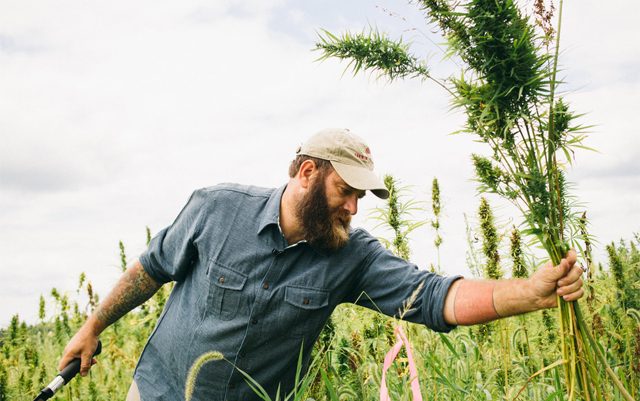
 

mike-lewis-and-the-growing-warriors

One of the things I love most about our industry is that it’s constantly being shaken up. Everywhere you look, there’s an individual or a company taking things to a previously unprecedented level. What’s even more amazing is the pace at which things are moving; a pace that’s only going to increase in speed as the industry becomes more open and recognized.

To help illustrate what I mean, think about this: If you have kids that are, say 5 years old or younger, there is a good chance that you won’t need to teach them how to drive. At least not the way you or I learned. It’s entirely possible that our kids will never have to grab a steering wheel or press a gas pedal.

Don’t worry, I’ll wait while you go ahead and put your brain back together.

But you see, these types of technological advancements aren’t being made in exclusivity. Strides like what I described above aren’t possible simply because the automobile industry is so advanced. The technology that would go into a self-driving car could be repurposed, tweaked just a little bit, and put to use in something like virtual reality. It can, and often does, work the other way around as well.

The cannabis industry is no exception, as we’re starting to see. I really enjoy tech — and I’m obsessed with entrepreneurship — so the flood of cannabis startups is an exciting thing to watch. Typing all this out makes me realize two things. One, I haven’t tackled this sort of topic in any of my previous posts. Two, I’m eager to do so for you guys.

But that’ll have to wait.

What? You thought all of that was to lead up to me covering some sort of futuristic weed tech? Nope. I just needed a good segue to what I’ll be talking about in today’s post. Who, actually, not what.

His name is Mike Lewis and he’s shaking things up in a simple but powerful way and he’s doing it with just his hands and his voice.

Mike Lewis! Who? Mike Lewis!

Aside from any readers I have out of Houston, who got the song reference?

In all seriousness though, Mike Lewis is a name you’ll come to know quite well if you don’t already. We’ll start with the basics. Mike is a proud husband, father, veteran of the United States Army and Kentucky farmer. In 2012, he established Growing Warriors, the first veteran-oriented food security organization. 

There are about one million veterans and active duty military personnel receiving benefits from the Supplemental Nutritional Assistance Program (SNAP), more commonly referred to as food stamps. It’s also no secret that the unemployment rate among veterans is unacceptably high. (To be fair, it is declining at a considerable rate.)  Mike’s answer to this issue? Teach them how to grow and preserve their own food while banding together within their communities. This was accomplished by forming partnerships with cities, veteran hospitals, educational institutions, and community based organizations in order to provide veterans with hands on, curriculum-based learning opportunities. Since it’s inception, Growing Warriors has been able to help dozens of veteran families produce tens of thousands of pounds in organic produce.

Keep in mind that I’m just giving you a brief introduction. Mike’s, and the Growing Warriors’, efforts extend across multiple states and I could easily fill out the rest of this post by diving deep into everything they’re doing. For today, though, I want to bring your attention to what Mike and the Growing Warriors are doing for our industry, specifically the industrial hemp side of things.

Harvesting Liberty With Growing Warriors

If you haven’t seen it yet, check out this short documentary film, Harvesting Liberty. Backed and presented by Patagonia, this film aims to address and shed light on the legalization of industrial hemp in the United States. Seriously, stop reading this, open that link in another tab, take the next 12 minutes of your day to watch it, then come back here to finish up and talk to me about what you think.

A couple of years ago, President Obama signed the Agriculture Act of 2014 — the Farm Bill — into effect. There’s a section of this act titled Legitimacy of Industrial Hemp Research. Basically, this section allows for universities and state departments of agriculture — in states where hemp is legal to grow — to grow hemp for research or pilot programs. Back in the 1800’s, Kentucky dominated the industrial hemp market. So, it’s quite fitting that a group of Kentucky farmers, Mike and the Growing Warriors, were given permission to cultivate 5 acres. 

As soon as they got their seeds, Mike “threw ‘em the ground really quickly before anybody changed their mind.”

American Hemp Flag

I found two things to be really interesting while watching that documentary and doing further research afterward.

First, the way Mike and his team go about processing the harvested hemp into useable materials. Get this: it’s done entirely by hand. When you think about it, that actually makes sense. Industrial hemp hasn’t been cultivated in America since it was listed as a Schedule I controlled substance, so of course there’s no hemp processing machinery just laying around waiting to be used. Even if there was, Mike wanted to use traditional methods to weave what he had in store. More on that in a moment, though.

They begin by using a process known as retting. Put simply, retting is the natural process of allowing moisture and microorganisms to remove the sugars in the stalk that hold all the fibers together. Once the plant has been retted completely, it’s moved to the barn for drying. What follows is called breaking, or decorticating. The hemp stalk is run through a hand powered machine that crushes the stalk and separates each of the fibers. Once separated, the fibers are spun together using spinners that are, once again, hand powered.

The second thing that really caught my interest (and by that I mean it had me grinning from ear to ear) is what they decided to make with the materials that came from this first harvest.

An American Flag. (Not sorry if I’m spoiling anything because I told you to stop and watch the documentary!)

“We made this American ingenuity with people from all walks of life. Life and society are not uniform or standardized in any way. This flag represents the bumps and ridges in our society and the great things that happen when we accept differences and work to solve problems. It represents all of us and our future.”

Nationwide Legalization of Industrial Hemp

On the 4th of July, Mike delivered that flag to Congress along with a speech in support of the Industrial Hemp Farming Act of 2015/2016. This act proposes the nationwide legalization of industrial hemp cultivation, something I’ll be digging into in a later article.

Mike takes a stance that you don’t see often in this industry and its activists. While he’s obviously in full support of legalization and bringing industrial hemp farming back to America, he also recognizes the need to take it slow. There’s a lot of mistakes left to be made and we need to let those kinks get worked out before attempting to blow up the market. Not only that, but there’s a ton of misinformation out there when it comes to hemp. Most of the public still doesn’t understand that hemp isn’t the same as its THC-laden counterpart cannabis.  

There’s a lot that can be said about Mike Lewis and all the work he’s putting out into the world. If I had to pick one thing, it would be that he’s solid proof that you don’t have to be a high tech startup out of San Francisco, Seattle, Portland, or Denver to effect real change on the cannabis industry. Those types of businesses have their place and I’m rooting for them. I just think it’s important that you don’t forget that there’s a place for you outside of an office space, if that’s where you’d rather be.

Interested in growing hemp or getting involved? You can learn more over at the National Hemp Association and the Hemp Industries Association.

CONTINUE READING…

Categories: US Hemp Co Museum | Leave a comment

Virginia: House Fails To Act On Bill To End License Suspensions For Minor Marijuana Violators

On February 9th, SB 327, legislation to amend state law so that first time, minor marijuana offenders no longer face the loss of their driver’s license, was approved by the full Senate.

Unfortunately members of the House Courts of Justice Committee failed to take action on the bill before the 2016 legislative session came to an end.  

Under existing law, marijuana possession offenses may be punishable by the loss of driving privileges, even in cases where the offense did not take place in a motor vehicle. Passage of SB 327 would have ended this practice. Virginia would have become the 35th state to cease the ineffective policy of automatic suspension of driver’s licenses for non-driving marijuana offenses.

Additional information regarding this and other pending marijuana law reform legislation is available by contacting Virginia NORML . Or follow them on Facebook.
 

National Organization for the Reform of Marijuana Laws – Advocacy Campaigns

Categories: Industrial Hemp Legislation | Tags: , , , , , , , , | Leave a comment

Study: Opioid Prevalence Falls Following Medical Cannabis Legalization

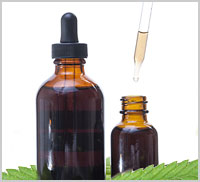
oil_bottlesThe implementation of medical marijuana programs is associated with a decrease in the prevalence of opioids detected among fatally injured drivers, according to data published in the American Journal of Public Health.

Researchers at Columbia University in New York and the University of California at Davis performed a between-state comparison of opioid positivity rates in fatal car accidents in 18 states. Authors reported that drivers between the ages of 21 and 40 who resided in states that permitted medical marijuana use were approximately half as likely to test positive for opioids as were similar drivers in jurisdictions that did not such programs in place.

They concluded, “Operational MMLs (medical marijuana laws) are associated with reductions in opioid positivity among 21- to 40-year-old fatally injured drivers and may reduce opioid use and overdose.”

Prior comparisons have determined that medical cannabis access is associated with lower rates of opioid use, abuse, and mortality. Most recently, a 2016 study published in the journal Health Affairs reported a significant decrease in the use of prescription medications following the implementation of medical marijuana programs.

An abstract of the study, “State medical marijuana laws and the prevalence of opioids detected among fatally injured drivers,” appears online here.

NORML Blog, Marijuana Law Reform

Categories: Hemp History | Tags: , , , , , , , | Leave a comment