Colorado: Governor Hickenlooper Signs Legislation Permitting Medical Cannabis Use In Schools

On Monday, June 6th, Governor John Hickenlooper signed House Bill 1373 into law. This legislation permits qualified patients access to medical cannabis formulations while on school grounds. 

“My son, if he needed medical marijuana and he needed it during the day while he was in school, I’d want him to have that opportunity,” Hickenlooper said.

“Those kids have every right and expect that they should be able to have access to those medicines, and they haven’t. My hope is that this bill… motivates those schools to make sure these kids can get the medication they apparently need.”

House and Senate lawmakers had previously overwhelmingly approved the legislation. 

Under the measure, a primary caregiver may administer non-inhalable formulations of medical cannabis to a qualifying patient while that patient is on the grounds of a pre-school, primary, or secondary school in which the student is enrolled. Medical marijuana patients may not be denied eligibility to attend school because of their cannabis use.
 
The measure took effect upon the Governor’s signature. 

NORML would like to thank those of you who contacted your state lawmakers in support of this legislation. 

National Organization for the Reform of Marijuana Laws – Advocacy Campaigns

Categories: Industrial Hemp Legislation | Tags: , , , , , , , , | Leave a comment

Arizona: Adult Use Marijuana Measure Cleared For November Ballot

vote_keyboardArizona voters will decide this November on a statewide ballot measure to legalize and regulate the adult use and retail sale of cannabis.

The Secretary of State’s office has confirmed that initiative proponents, The Campaign to Regulate Marijuana like Alcohol, submitted a sufficient number of signatures from registered voters to qualify the measure for the November ballot. A Maricopa County judge has also dismissed a lawsuit that sought to prohibit the measure from going before voters, although initiative opponents may seek to further litigate the matter before the state Supreme Court.

Proposition 205 permits adults to legally possess (up to one ounce of marijuana flowers and/or five grams of marijuana concentrates) and cultivate marijuana (up to six plants) for their own personal use, and establishes licensing for its commercial production and retail sale. Commercial, for-profit sales of cannabis will be subject to taxation, while non-commercial exchanges of marijuana will not be taxed.

Similar adult use measures will appear on the ballot this November in California, Maine, Massachusetts, and Nevada. Voters in Arkansas, Florida, Montana, and North Dakota will also decide on medical use measures this fall. A Missouri statewide initiative seeking to regulate the plant’s medicinal use is in litigation.

A summary of 2016 statewide ballot measures and their status is online here.

NORML Blog, Marijuana Law Reform

Categories: Hemp History | Tags: , , , , , , | Leave a comment

Proponents of Marijuana Club Initiative Exceed Expectations

Jordan Person, executive director of the Denver Chapter of the National Organization for the Reform of Marijuana Laws (NORML) submitted roughly 8,000 signatures this week to Denver’s Election Division with the hope of qualifying the Responsible Use Initiative for this November’s ballot. Relying on the hard work and dedication of more than twenty grassroots activists, the Denver NORML team worked tirelessly for more than three months educating voters on the issue and collecting signatures throughout the city. The campaign needs a total of 4,726 valid signatures to qualify for the ballot.Logo-1-R4

“I could not be more proud of the grassroots movement Denver NORML has created. Our volunteers sacrificed every moment they could to work hard for this campaign.” Person said. “It was an easy choice for most because of how much they believe in the initiative they are fighting for. As we go through this interim period of waiting, hoping and preparing we look forward to the future with excitement.”

If certified for the ballot, Denver voters will be among the first in the nation to decide whether to regulate legal private marijuana clubs for adults 21 and over.

Officials with Denver Elections have 25 days to verify the campaign’s signatures. Regardless of the outcome, this has been a groundbreaking effort to normalize the consumption of marijuana in America.

In addition to Denver NORML’s Responsible Use Campaign, voters in the city might also have the opportunity to vote on a similar, yet more limited proposal that would restrict consumers to vaping in predesignated areas.

NORML Blog, Marijuana Law Reform

Categories: Hemp History | Tags: , , , , , | Leave a comment

Federal Court of Appeals Upholds Ban on Prosecuting State-Compliant Medical Marijuana Businesses

Medical marijuanaA three-judge panel of the US Court of Appeals for the 9th Circuit, covering nine western states, earlier this week ruled unanimously that the Department of Justice is barred by federal law from prosecuting medical marijuana businesses if those businesses are operating in compliance with state law.

This decision came in an appeal in which the court had consolidated ten different cases from California and Washington, in which the defendants — growers and dispensaries — had argued that their federal indictments should be dismissed because of a current ban, enacted by Congress in 2014, on the use of federal funds to prosecute state-compliant medical marijuana activities. Known as the Rohrabacher-Farr Amendment, the language of the enactment said federal funds could not be used to prevent states from “implementing their own state laws that authorize the use, distribution, possession or cultivation of medical marijuana.”

The Department of Justice had argued the ban only precluded their interference with the state governments, and did not ban federal prosecutions against individual defendants. The Court of Appeals rejected this argument, and remanded the cases back to the US District Courts for an evidentiary hearing to determine if the individual defendants had in fact acted in compliance with their state medical marijuana laws.

Judge Diarmuid O’Scannlain, writing for the panel, did warn in his opinion that Congress could restore funding to prosecute these cases “tomorrow, a year from now, or four years from now, and the government could then prosecute individuals who committed offenses while the government lacked funding.”

NORML Blog, Marijuana Law Reform

Categories: Hemp History | Tags: , , , , , , , , | Leave a comment

Poll: Two-Thirds Of Californians Support Legalizing Retail Sales Of Marijuana To Adults

Legalize marijuanaMore than two in three California voters support the establishment of a state-regulated retail market for the sale of marijuana to adults, according to polling data compiled by the Institute of Government Studies at the University of California, Berkeley.

Sixty-four percent of respondents agree, “Marijuana should be legal for adults to purchase and use recreationally, with government regulations similar to the regulation of alcohol.”

Support is strongest among those between the ages 18 to 24 (75 percent), Democrats (74 percent), African Americans (72 percent), those between the ages of 25 to 34 (71 percent), and Latino voters (69 percent). Among voters over 65 years of age, 58 percent back legalization.

The polling data bodes well for the passage of California’s Proposition 64 this November. The statewide initiative permit adults to legally grow (up to six plants) and possess personal use quantities of cannabis (up to one ounce of flower and/or up to eight grams of concentrate) while also licensing commercial cannabis production and retail sales. The measure prohibits localities from taking actions to infringe upon adults’ ability to possess and cultivate cannabis for non-commercial purposes. The initiative language specifies that it is not intended to “repeal, affect, restrict, or preempt … laws pertaining to the Compassionate Use Act of 1996.” Proposition 64 is endorsed by the ACLU of California, the California Democratic Party, the California Medical Association, California Lt. Gov. Gavin Newsom, the California NAACP, the Drug Policy Alliance, Students for Sensible Drug Policy, and NORML.

Voters in Arizona, Maine, Massachusetts, and Nevada will similarly decide on adult use measures in November. Voters in Arkansas, Florida, Missouri, Montana, and North Dakota are expected to also decide on medical use measures this fall.

A summary of 2016 statewide ballot measures and their status is online here.

NORML Blog, Marijuana Law Reform

Categories: Hemp History | Tags: , , , , , , , , | Leave a comment

Tennessee: Hemp Production Measure Signed Into Law

Legislation, HB 2032, permitting the cultivation and processing of industrial hemp has become law.

The measure permits  for the licensed cultivation of industrial hemp when “grown by an institution of higher education in this state that offers a baccalaureate or post-graduate level program of study in agricultural sciences.”

Over 20 states have enacted similar legislation, which is compliant with Section 7606 of the 2014 federal farm bill.

The law also establishes a process for licensure for persons who wish to process or distribute industrial hemp within the state.

The law took effect on April 27, 2016.

National Organization for the Reform of Marijuana Laws – Advocacy Campaigns

Categories: Industrial Hemp Legislation | Tags: , , , , , | Leave a comment

Congress Votes To Permit Military Veterans Access To Medical Cannabis

Members of the US House of Representatives voted today for the first time to expand military veterans’ access to medicinal cannabis in states that allow it.

Members voted 233 to 189 in favor of the Veterans Equal Access Amendment, offered by Rep. Blumenauer (D-OR) to the Fiscal Year 2017 Military Construction, Veterans Affairs and Related Agencies Appropriations bill, that prohibits the federal government from sanctioning V.A. physicians who wish to recommend cannabis therapy to their patients.

“We should not be limiting the treatment options available to our veterans,” Rep. Blumenauer opined on the House floor.

Under the provision, military veterans who reside in states with active medical marijuana programs would be able to obtain a recommendation from their V.A. physician rather than having to seek out a private doctor.

The vote is a marked change from last year, when House members defeated a similar amendment 213 to 210.

You can watch today’s debate and vote here. A roll call of the amendment vote is here.

Members of the US Senate Appropriations Committee previously voted in April in favor of a similar provision. This afternoon, legislation containing the amendment was approved on the Senate floor.

The House and Senate versions of FY 2017 Military Construction, Veterans Affairs and Related Agencies Appropriations bill will now await a concurrence vote prior to being sent to the President.

National Organization for the Reform of Marijuana Laws – Advocacy Campaigns

Categories: Industrial Hemp Legislation | Tags: , , , , , , , | Leave a comment

West Virginia: Lawmakers Fail To Act On Marijuana Decriminalization Measure During Special Session

Lawmakers failed to consider legislation that was introduced during this legislative season’s special session to decriminalize the possession and cultivation of limited quantities of marijuana in West Virginia.

House Bill 114 sought to permit the personal use, growth and possession of up to two ounces of marijuana by persons over the age of twenty-one who have acquired a “tax stamp” from the state. It would have removed marijuana from the state list of schedule I drugs and decriminalize first-time marijuana distribution offenses involving under 30 grams of marijuana. Adults would have been allowed to transfer to another person twenty-one years of age or older, without remuneration, one ounce or less of marijuana.

Adults who choose to grow their own marijuana would have been permitted to cultivate and harvest up to six plants.

Misdemeanor criminal penalties would have remained in place for those adults who fail to purchase a tax stamp or who are found to be in possession of more than two ounces of marijuana or who are engaged in commercial marijuana sales.

Under current state law, possession of marijuana in any amount is a misdemeanor punishable by no less than 90 days, or no more than 6 months in jail and a fine of up to $ 1,000.

NORML would like to thank those of you who contacted your state lawmakers in support of this legislation. 

National Organization for the Reform of Marijuana Laws – Advocacy Campaigns

Categories: Industrial Hemp Legislation | Tags: , , , , , , , , , | Leave a comment

Illinois: Governor Signs Marijuana Decriminalization Measure

thumbs_upRepublican Governor Bruce Rauner signed legislation today amending the state’s marijuana possession penalties.

Senate Bill 2228 reduces the penalties for the possession of up to 10 grams of marijuana from a criminal misdemeanor (formerly punishable by up to six months in jail and a $ 1,500 fine) to a civil fine of no more than $ 200 — no arrest and no criminal record.

It also decriminalizes related offenses involving the possession of marijuana paraphernalia.

Senate Bill 2228 also amends the state’s zero tolerance per se traffic safety law, stating that the presence of THC in blood at levels below 5ng/ml “shall not give rise to any presumption that the person was or was not under the influence of cannabis.”

The full text of the measure is available here.

According to the ACLU, Illinois police arrest some 50,000 individuals annually for marijuana possession offenses — ranking #5 in the nation in per capita marijuana possession arrests.

Illinois becomes the third largest state to decriminalize minor marijuana possession offenses.

NORML Blog, Marijuana Law Reform

Categories: Hemp History | Tags: , , , , , | Leave a comment

A Pathway Towards Marijuana Legalization: The Significance of the Democratic Platform

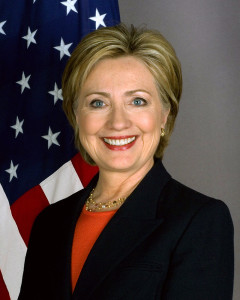
Hillary_Clinton_official_Secretary_of_State_portrait_cropAmong all the speeches and balloons and revelry of the recently completed Democratic National Convention — a convention that has already made history by nominating a woman for president – was a far less obvious, but important change in the Democratic Party platform. For the first time since marijuana was made illegal on the federal level in 1937, a major party platform has embraced a strategy they describe as a “reasoned pathway for future legalization.”

That’s right. While many mainstream elected officials remain skittish of endorsing or embracing potentially controversial social issues, the 2016 Democratic Party finally could no longer ignore the changing attitudes towards marijuana legalization reflected in the national polls, and evidenced by the growing number of states that have already moved in this direction.

The precise text of the history-making marijuana amendment was as follows:

“Because of conflicting laws concerning marijuana, both on the federal and state levels, we      encourage the federal government to remove marijuana from its list as a Class 1 Federal Controlled Substance, providing a reasoned pathway for future legalization”

In other words, the Democrats endorsed the strategy legalizers have been following since 2012, when we first legalized marijuana in Colorado and Washington, despite the continuation of federal prohibition.

Now let’s be honest. We have all seen over the years that the national parties tend to adopt a platform favored by their candidate, which is then almost immediately ignored once the candidate is elected. The platform is a campaign tool, and it is malleable, so as not to box anyone into a position he/she is uncomfortable with.

Nonetheless, seeing the words “a reasoned pathway for future legalization” in the Democratic platform is truly empowering for those who have worked so long to try to get our state and national elected officials to embrace an end to marijuana prohibition. It provides political cover to any and all elected officials who have known all along that prohibition causes more harm than the marijuana it is intended to protect us from, but who have feared an honest position might endanger their political careers.

The Bernie Sanders Factor

We all recognize that Sen. Bernie Sanders had the strongest pro-legalization position; and that his publicizing that position during the hard-fought campaign, and fighting for those provisions during the platform debates, caused Sec. Hillary Clinton and her supporters to more to the left, first endorsing the medical use of marijuana, and most importantly, agreeing with Sanders that the states should be allowed to continue to experiment with full legalization, without interference from the federal government. That is a significant improvement over her earlier cautious statements calling for more research, and should assure us at least four more years to demonstrate to the public that legalization is an effective program with few if any unintended consequences. Thanks, Bernie, we are in your debt.

Incremental Change

With social issues, occasionally progress comes in bold steps, especially if the courts get involved and determine that an existing policy is unconstitutional (e.g., Roe v Wade on abortion rights or Obergefell v. Hodges on gay marriages). Of course, each of these victories was preceded by decades of litigation, so they too were not exactly overnight successes. Change takes time in this country, and generally occurs in incremental steps, rather than by big steps.

But the courts have consistently refused to hold marijuana prohibition is unconstitutional (with the exception of a state decision out of Alaska back in 1975 (Ravin v  State ) holding the marijuana laws were unconstitutional as applied to personal use amounts in the home). So we don’t have the luxury of designing a strategy to win this fight with one big, successful court decision. We will have to win legalization through a combination of voter initiatives in the states that offer that option, and passing legislation in the other states, a challenging task that almost assures those states will be among the last to change.

But prohibition has been in effect for 80 years, resulting in the arrest of more than 30 million Americans on marijuana charges, many serving time in prison, alienating generations of young people and severely limiting their ability to get an education and advance professionally in their chosen careers. If necessary, we can certainly spend a few more decades (and I believe it will require a decade or more to finally treat responsible marijuana smokers fairly, including ending job discrimination, unfair child care policies, and unfair DUID provisions) to repair the damage caused by prohibition.

For the first time in my lifetime, a major political party has suggested they too recognize the need to move towards legalization, and away from prohibition. It was certainly not the headline of a convention that nominated the first female candidate for president, but it surely was a wonderfully hopeful sign of things to come.

By the next quadrennial conventions, even the Republicans may have found the courage to state the obvious.

NORML Blog, Marijuana Law Reform

Categories: Hemp History | Tags: , , , , , , | Leave a comment