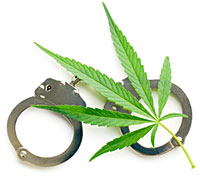
Ohio: Governor Signs Bill Amending Driver’s License Suspension Policy For Drug Offenders

On June 13th Governor John Kasich signed legislation, Senate Bill 204, into law so that certain drug offenses are no longer punishable by a mandatory loss of one’s driver’s license.

House lawmakers previously approved the legislation in a 95 to 2 vote while Senate lawmakers unanimously approved the legislation.

Under previous law, any drug conviction carried a mandatory driver’s license suspension of at least six months, even in cases where the possession offense did not take place in a vehicle. Senate Bill 204 makes such suspensions discretionary rather than mandatory.

The law will take effect September 13th, 2016. 

NORML would like to thank those of you who contacted your state lawmakers and Governor in support of this legislation.

For more information on this bill and other pending legislation, contact Ohio NORML.

National Organization for the Reform of Marijuana Laws – Advocacy Campaigns

Categories: Industrial Hemp Legislation | Tags: , , , , , , , , , , | Leave a comment

Louisiana: Industrial Hemp Measure Killed

Members of the Senate Agriculture committee voted unanimously on May 3rd against legislation, HB 1085, which had sought to permit licensed farmers to grow industrial hemp in accordance with a state-sponsored research program.

Members of the House had previously approved the legislation in a 67 to 25 vote on April 26th.

Under the measure, state universities would have been allowed to develop a pilot program to study the growth, cultivation or marketing of industrial hemp for agricultural or academic research.

Members of Congress reauthorized language in the omnibus federal Farm Bill explicitly authorizing states to sponsor hemp research absent federal reclassification of the plant. Presently, more than 20 states have enacted legislation permitting licensed hemp cultivation in a manner that is compliant with this statute.

NORML would like to thank those of you who contacted your state lawmakers in support of this legislation. 

National Organization for the Reform of Marijuana Laws – Advocacy Campaigns

Categories: Industrial Hemp Legislation | Tags: , , , , | Leave a comment

Ohio: Governor Signs Medical Marijuana Vaporization Measure

Ohio Governor John Kasich has signed legislation into law establishing regulations for the licensed production and dispensing of medical cannabis formulations to qualified patients.

House Bill 523 authorizes the use of various forms of cannabis preparations for the physician-authorized treatment of the following qualifying conditions: acquired immune deficiency syndrome (AIDS); Alzheimer’s disease; Amyotrophic lateral sclerosis (Lou Gehrig’s disease); cancer; chronic traumatic encephalopathy; Crohn’s disease; epilepsy or other seizure disorders; fibromyalgia; glaucoma; hepatitis C; inflammatory bowel disease; multiple sclerosis; pain that is either of the following nature: (i) Chronic and severe; or (ii) Intractable; Parkinson’s disease; positive status for HIV; post-traumatic stress disorder; sickle cell anemia; spinal cord disease or injury; Tourette’s syndrome; traumatic brain injury; and ulcerative colitis.

The new law, which takes effect in 90 days, requires state regulators to license the production, distribution, and testing of cannabis products, but it forbids home cultivation of the plant.
Cannabis-specific products may be dispensed as oils, tinctures, edibles, patches, or as herbal material.

Smoking herbal cannabis is not permitted under the measure; however, the measure does not clarify how this prohibition would be enforced.

The vaporizing of medical cannabis products by patients is permitted by the legislation. Similar smoking restrictions exist in four other states: Louisiana, Minnesota, New York, and Pennsylvania.
THC content in herbal cannabis will be limited to 35 percent under the measure, while extracts will be capped at 75 percent THC.

Although the program is not anticipated to be fully operational until early 2018, provisions in the law provide limited legal protections for qualifying patients who acquire cannabis from alternative sources prior to this date.

A summary of the bill is available from the Ohio Patient Network here

Ohio is the 26th state to enact statutory language permitting the physician-supervised use of medical marijuana.

NORML would like to thank those of you who contacted your state lawmakers in support of this legislation. 

National Organization for the Reform of Marijuana Laws – Advocacy Campaigns

Categories: Industrial Hemp Legislation | Tags: , , , , , , | Leave a comment

When State Revenue and Personal Freedom Coincide

C1_8734_r_xWhat Gambling Can Tell Us About Legalizing Marijuana
I am old enough to remember when Nevada was the only state where gambling was legal. In 1931, during the Great Depression, the state legislature had legalized casino gambling as a way to stimulate their economy, create new jobs, and entice more people to the state.

For decades Nevada had a monopoly on casino gambling — that, along with legalizing “no fault” divorces, and later legalizing prostitution — when most states did not offer those options. These factors combined to give Nevada a reputation as a maverick state where people could visit to engage in naughty behavior without legal consequences. “What Happens in Vegas Stays in Vegas.”

The state is expected to legalize the recreational use of marijuana via voter initiative (Question 2) this November, which will further enhance that reputation.

Other states obviously knew that legal gambling was an alternative that might provide an economic boost to their states as well, but the prevailing morality at the time was far too negative towards gambling for elected officials in other states to pursue. It was a time when the religious communities had successfully convinced most Americans that a life of virtue, not vices, was the path to happiness.

But social mores change over time, and as gambling began to be seen as a legitimate form of entertainment, instead of a moral sin, the tax revenue and economic benefits from legal gambling were more attractive. In 1977, by voter initiative, New Jersey legalized casino gambling in Atlantic City, offering an east coast version of Nevada, where gambling hedonists could legally do what they could not yet do in their own states.

And gradually the barriers banning legal gambling began to crumble nationwide, leading to a situation today in which every state has some form of legal gambling, such as state-run lotteries, albeit with strange limitations in some states (e.g., in Missouri it is illegal to gamble on land, but perfectly legal to have casinos on riverboats on the Mississippi and the Missouri rivers, although the boats never leave the shore).

The Balancing Test.

Which leads to the question of why behavior thought by many to be inappropriate (or even morally offensive), can nonetheless sometimes be legalized? Or put another way, when is conduct with the tinge of sinfulness out-weighted by the potential for economic benefits to the states?

I raise that question because of the increasingly profitable side of legal marijuana in the states that have elected to regulate and tax marijuana. As the latest revenue data make clear, legalizing marijuana has been an enormous benefit for the few states that have taken that step, and that fact will be more and more difficult for neighboring states to ignore over the coming years. As we saw with gambling, once the economic benefits of legal marijuana are obvious, the moral opposition will fade and the economic arguments will prevail.

The Latest Data from Colorado and Washington

In Colorado, the first state to get their legal retail outlets up and running on January 1, 2014, the gross sales of marijuana, and the tax revenue to the state, have continued to rise each year. For 2015, licensed marijuana stores in the state totaled an astounding $ 996,184,788 – just shy of $ 1 billion dollars, up from $ 669 million in sales in 2014.

Colorado collected more than $ 135 million in taxes and fees last year (including $ 35 million dedicated to school construction), up from $ 76 million in 2014 (when $ 13.3 million was raised for schools).

In Washington state, marijuana retail sales reached $ 322,823,639 in 2015, up from only $ 30,783,880 in 2014, when retail outlets were open for only a portion of the year. That 2015 sales figure has already been eclipsed in the first seven months of 2016.

The state retail tax revenue for fiscal year 2016 from recreational marijuana sales totaled $ 30,017,823, while state retail sales taxes from the sale of medical marijuana totaled $ 5,236,536. Local retail sales tax totaled $ 11,228,861 from recreational sales, and local retail tax totaled $ 2,084,323 for medical sales.

These, as Republican presidential nominee Donald Trump might say, are “yugee” numbers, and they are continuing to increase each year, making them more and more difficult to ignore by other states.

Marijuana Legalization is Inevitable

Which brings me to my main point. At a time when several national polls confirm that between 55 and 61 percent of the entire country now favor full legalization, it is difficult to argue that marijuana smoking is, any longer, considered immoral behavior. Sure, there are pockets of fundamental moralists to whom anything pleasurable will always be suspect behavior, including sex, drugs, and rock-and-roll. But this puritanical perspective is finding less and less support each year, and when balanced with the economic windfall that results when a state legalizes marijuana, it simply cannot prevail.

Today a majority of Americans under 65 support marijuana legalization, particularly younger adults: 71 percent of adults under 35 think marijuana use should be legal, a jump of 10 points since last year. The demographics are clear and unstoppable, as younger voters replace those over 65.

Just as all states now have some form of legal gambling, within a few short years, all states will offer some form of legal marijuana. It’s the smart thing to do; it’s the right thing to do; and it’s inevitable in a democracy, when most people want it.

__________________________________________________________________________

This column originally ran on ATTN:

http://www.attn.com/stories/10830/what-gambling-can-tell-us-about-marijuana-legalization


NORML Blog, Marijuana Law Reform

Categories: Hemp History | Tags: , , , , | Leave a comment

North Carolina: Lawmakers Fail To Act On Measure To Allow Medical Marijuana For Chronic Illnesses

Lawmakers have failed to act on house legislation to permit the limited use of medical marijuana.

House Bill 983 would have exempted patients engaging in the physicians-recommended use of cannabis to treat a chronic or terminal illness from criminal prosecution under state law. Qualifying patients would have needed to possess a tax stamp issued by the state department of Revenue, and would be allowed to possess no more than three ounces of cannabis at any one time.

The proposal did not permit patients to cultivate their own cannabis, nor did it establish a state-licensed supply source.

You can read the full text of the bill here.

According statewide polling, nearly 7 out of 10 residents favor allowing physicians to authorize cannabis therapy. FOX 46, a local news station in Charlotte, is writing a number of stories on how residents could benefit from medical cannabis access. You can find the first story in this series here

Existing law proposing qualifying patients to possess cannabidiol-infused products (but providing no in-state supply source) has proven to be unworkable. Patients deserve the option to legally access a botanical product that is objectively safer than the litany of pharmaceutical drugs it could replace.

NORML would like to thank those of you who contacted your state lawmers in support of this legisation. 

Additional information on this measure and other pending marijuana law reform proposals is available by contacting NORML of North Carolina.

National Organization for the Reform of Marijuana Laws – Advocacy Campaigns

Categories: Industrial Hemp Legislation | Tags: , , , , , , , , , | Leave a comment

Ohio NORML Continues the Fight on the Local Level

Cannabis PenaltiesStatewide marijuana legalization efforts in Ohio have proven to be more difficult than many expected. After Ohio voters overwhelming rejected Issue 3 – a well-funded ballot initiative, that would have legalized the possession of up to one ounce of marijuana for adults 21 and over, but also contained severe restrictions with regard to retail production of the plant – many advocates promised to return with a better plan for marijuana consumers. But those plans were quickly derailed after the Ohio General Assembly established a limited, yet workable medical marijuana program with the passage of House Bill 523.

With no statewide initiative, many activists decided to shift their focus to working with state lawmakers to strengthen HB 523 by expanding access and advocating for amendments to permit for home cultivation for patients and caregivers. And since the possession of less than 100 grams (roughly 3.5 ounces) of marijuana is considered a “minor misdemeanor,” punishable by a maximum fine of $ 150 plus $ 100 in court costs, some activists found themselves complacent with the status quo. After considering these points, members of Ohio Chapter of the National Organization for the Reform of Marijuana Laws (NORML) decided to explore reform options on the local level.

Taking a page out of their own playbook, Eleanor Ahrens and Chad Thompson, led by executive director Cher Neufer, decided they would retool a local decriminalization measure that was approved by Toledo voters in 2015. With this strategy the group set their sights on several municipalities across the state. Activists in the municipalities of Newark Bellaire, Bellevue, Cleveland, Elyria, Logan, Huron, Athens and Norwood, as well as in Lucas County, started to collect signatures for a “complete decriminalization” measure that would further decriminalize the possession of up to 200 grams of marijuana flower, up to 10 grams of concentrates, paraphernalia, by removing all fines and court costs.

“Complete Decrim is a new innovative way to make any misdemeanor offense basically legal,” Neufer said. “With no fines, no jail time, no drivers license suspension, and no court costs, we are making the police just walk away from misdemeanor marijuana offenses as if it were a legal substance.”

To date, the group has successfully qualified the measure for the municipal ballot in the cities of Newark and Logan this November, but fell short in the city of Athens. Activists with Ohio NORML plan to continue their effort. An effort that could extend well into 2017. For more information about or to get involved with Ohio NORML, please email info@ohionorml.org today!

NORML Blog, Marijuana Law Reform

Categories: Hemp History | Tags: , , , , , | Leave a comment

Pennsylvania: Marijuana Decriminalization Bill Introduced

Representative Ed Gainey has introduced legislation, House Bill 2076, to amend the state’s controlled substances act so that minor marijuana possession offenses are considered a non-criminal offense.

States Rep. Gainey in a recent memorandum to House members:

“Despite both local and nationwide progress on the issue of cannabis prohibition Pennsylvania continues to charge over 18,000 individuals each year with minor possessory offenses. Minorities are disproportionately affect by as much as a 5 – 1 ratio despite similar usage rates as their white counterparts. A misdemeanor conviction can have lifelong implications including loss of employment, loss of public housing and loss of educational loan eligibility.  We cannot afford either the short term or the long term effects of saddling Pennsylvanians with misdemeanor charges and convictions for minor cannabis possession.”

House Bill 2076 would impose a fine and a summary conviction for an individual possessing 30 grams or less of marijuana or eight 8 grams or less of hashish. Offenders would no longer face criminal arrest, incarceration, or a criminal record.

Current state law considers possession of 30 grams or less of marijuana a misdemeanor criminal penalty punished by 30 days incarceration and up to a $ 500 fine. 

Additional information is available from Philly NORML and/or Pittsburgh NORML.

The bill is now pending before the House Judiciary committee. NORML will keep you updated as this legislation moves forward.

Enter your zip code below to contact your state Representative and urge their support for this common sense reform. 

National Organization for the Reform of Marijuana Laws – Advocacy Campaigns

Categories: Industrial Hemp Legislation | Tags: , , , , | Leave a comment

Connecticut: New Measure Expands State’s Medical Cannabis Program

Democrat Gov. Dannel Malloy signed legislation on May 17 expanding patients’ access to the state’s medicinal cannabis program.

House Bill 5450  permits qualifying patients under the age of 18 to possess and consume medical cannabis preparations. The proposal also expands the list of qualifying illnesses eligible for cannabis therapy to include:  ”uncontrolled intractable seizure disorder,” ”irreversible spinal cord injury with objective neurological indication of intractable spasticity,” “cerebral palsy,” “cystic fibrosis,” or “terminal illness requiring end-of-life care.”

Other provisions in the bill seek to establish a statewide clinical research program, and protect nurses from criminal, civil, or disciplinary sanction if they choose to administer marijuana to a qualifying patient in a hospital setting.

You can read the full text of the bill here.

The new law takes effect on October 1, 2016.

National Organization for the Reform of Marijuana Laws – Advocacy Campaigns

Categories: Industrial Hemp Legislation | Tags: , , , , , , | Leave a comment

Tennessee: Law Amends Felony Marijuana Penalties

Legislation signed into law amends felony marijuana possession penalties.

House Bill 1478 amends third-time marijuana possession offenses from a Class E felony, punishable by up to six years in prison, to a misdemeanor offense, punishable by no more than one year in jail.

The new sentencing penalties take effect on July 1, 2016.

You can read a summary of HB 1478 here.

National Organization for the Reform of Marijuana Laws – Advocacy Campaigns

Categories: Industrial Hemp Legislation | Tags: , , , , | Leave a comment

Hawaii: Governor Signs Medical Cannabis Expansion Law

Governor David Ige has signed legislation, House Bill 2707, to expand the state’s medical cannabis program. 

The measure expands the pool of practitioners who may legally recommend cannabis therapy to include advanced nurse practitioners. Separate provisions in the bill removes the prohibition on Sunday dispensary sales and on the possession of marijuana-related paraphernalia by qualified patients.

Other language in the bill permits the transportation of medical marijuana across islands for the purposes of laboratory testing, but maintains existing prohibitions banning individual patients from engaging in inter-island travel with their medicine. 

Full text of the bill is available here. A summary of the law is available here

National Organization for the Reform of Marijuana Laws – Advocacy Campaigns

Categories: Industrial Hemp Legislation | Tags: , , , , , | Leave a comment