U.S. House of Representatives Votes to Legalize Industrial Hemp


WhiteHouse

The U.S. House of Representatives voted 225-200 on June 20 to legalize the industrial farming of hemp fiber. Hemp is the same species as the marijuana plant, and its fiber has been used to create clothing, paper, and other industrial products for thousands of years; however, it has been listed as a “controlled substance” since the beginning of the drug war in the United States. Unlike marijuana varieties of the plant, hemp is not bred to create high quantities of the drug THC.

The amendment’s sponsor, Jared Polis (D-Colo.), noted in congressional debate that “George Washington and Thomas Jefferson grew hemp. The first American flag was made of hemp. And today, U.S. retailers sell over $300 million worth of goods containing hemp — but all of that hemp is imported, since farmers can’t grow it here. The federal government should clarify that states should have the ability to regulate academic and agriculture research of industrial hemp without fear of federal interference. Hemp is not marijuana, and at the very least, we should allow our universities — the greatest in the world — to research the potential benefits and downsides of this important agricultural commodity.”

The 225-200 vote included 62 Republican votes for the Polis amendment, many of whom were members of Justin Amash’s Republican Liberty Caucus or representatives from farm states. But most Republicans opposed the amendment, claiming it would make the drug war more difficult. “When you plant hemp alongside marijuana, you can’t tell the difference,” Representative Steve King (R-Iowa) said in congressional debate on the amendment to the Federal Agriculture Reform and Risk Management Act of 2013.

“This is not about a drugs bill. This is about jobs,” Representative Thomas Massie (R-Ky.) countered King in House floor debate June 20. Massie, a key House Republican ally of Senator Rand Paul of Kentucky and a member of the Republican Liberty Caucus, opposes marijuana legalization but had signed on as a cosponsor of the Polis amendment.

The amendment would take industrial hemp off the controlled substances list if it meets the following classification: “The term ‘industrial hemp’ means the plant Cannabis sativa L. and any part of such plant, whether growing or not, with a delta-9 tetrahydrocannabinol concentration of not more than 0.3 percent on a dry weight basis.” The amendment would allow industrial farming of hemp “if a person grows or processes Cannabis sativa L. for purposes of making industrial hemp in accordance with State law.” Most states have passed laws legalizing industrial hemp, in whole or in part, but federal prohibitions have kept the plant from legal cultivation.

However, the annual agricultural authorization bill subsequently went down to defeat in the House by a vote of 195 to 234. Sponsors of the amendment hope that it will be revised in conference committee, where it has strong support from both Kentucky senators, Rand Paul and Senate Minority Leader Mitch McConnell.

The legislation, originally offered as the bill H.R. 525, was sponsored by Jared Polis (D-Colo.) and Earl Blumenauer (D-Ore.), who represent states where voters recently considered ballot measures that legalized marijuana within their states, a fact King pointed out in House floor debate. Voters in Colorado and Washington approved the ballot measures in 2012, but voters in Oregon rejected a ballot measure that would have legalized cultivation of marijuana.

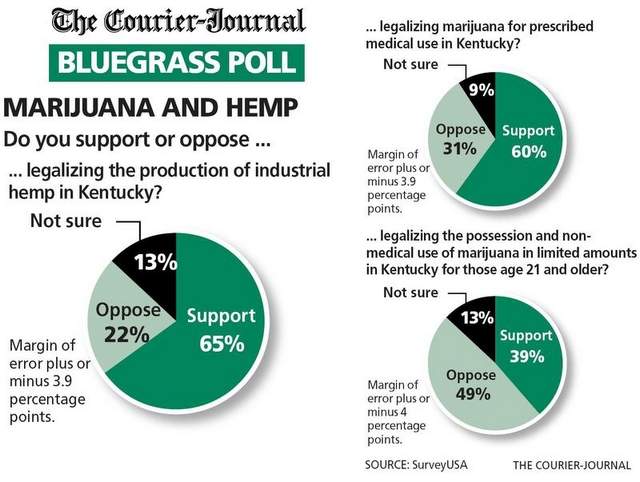
Recent polls have indicated that most Americans want legalization of marijuana, as well as hemp. Though support for marijuana legalization is by only a slim majority of the public, there’s a larger divide among age groups, with younger voters more heavily favoring legalization.

None of the debate on the amendment related to the constitutional authority of Congress to ban substances. Nor did any congressman reference the first time Congress banned a drug — alcohol. At that time, Congress followed proper constitutional protocol to amend the U.S. Constitution first, giving it the legitimate power to ban alcohol (i.e., the 18th Amendment). No comparable constitutional amendment has been passed for hemp, marijuana, raw milk, or any other substance prohibited by the federal government.

Categories: US Hemp Co Museum | Tags: , , , , , , , , , , , , , , , | Leave a comment

Marijuana fed pork becoming highly successful


SEATTLE, Washington (KING) – It’s a different kind of head shop found just down the stairs from the Pike Place market.

It’s the BB Ranch selling something that’s even better than bacon. It’s marijuana fed pork.

“The pig farmer has been feeding them marijuana for the last two and a half months of their life and they’ve been happy as hell,” said William Von Schneidau, owner of the butcher shop.

This is all thanks the voters of Washington who legalized marijuana in the last election. That’s when Von Schneidau saw the opportunity wasn’t just blowing smoke.

“And then all of a sudden marijuana, you know, became legal a few months ago and somehow, I don’t know how, I met the commercial growers and they needed to get rid of some of their stuff. So rather than going into the compost pile we said, ‘Lets try it out.’ So here we go,” said he said.

The pigs are raised in a farm about an hour outside of Seattle. In fact, these pigs are on the rock star diet. The mix contains drugs and alcohol, the booze coming by way of the spent grains from Woodinville’s Project V Vodka.

The pot pigs grow to be extra fat and really happy according to the farmer who wants to be anonymous.

Here’s the tough part of the story. The pigs love eating weed, and what gives me pleasure is BBQ pork.

So I brought some pot pork belly to my buddy Steve Freeman at Celtic Cowboy BBQ in Edmonds. And we decided to smoke it.

Steve rubbed the belly, which is basically the part that bacon comes from, with spices and tossed it into the smoker for about 45 minuets. He then seared it on a skillet.

Steve says the results are stunning.

“That’s some pretty happy pork right there. He’s done a good job with that. I really like that,” he said.

And that takes us back to the happiest farm in Washington. Yes, the pigs will become BBQ one day.

But if you gotta go, why not go out on a high.

CONTINUE READING/VIDEO….

Categories: US Hemp Co Museum | Tags: , , , , , , | Leave a comment

Ky.’s senators blocked in effort to legalize hemp

By BRUCE SCHREINER, Associated Press


LOUISVILLE, Ky. (AP) — Kentucky’s U.S. senators suffered a setback Thursday in their efforts to re-establish industrial hemp as a legal crop, but they vowed to continue their campaign after getting blocked as they tried to attach hemp language to the Senate farm bill.

Senate Minority Leader Mitch McConnell and Sen. Rand Paul said they would oppose the Senate farm legislation.

Their amendment would have removed federal restrictions on the domestic production of industrial hemp. The crop once flourished in Kentucky until it was banned decades ago when the federal government classified it as a controlled substance related to marijuana.

Hemp has a negligible content of THC, the psychoactive compound that gives marijuana users a high.

The push by McConnell and Paul to legalize industrial hemp comes after Kentucky’s legislature passed a bill this year to allow the crop to be reintroduced in the Bluegrass State, but only if the federal government lifted its prohibition on the plant.

“Although we’re disappointed in the lack of consideration of our industrial hemp amendment, it is only the beginning of our legislative efforts,” the Republican U.S. senators said in a joint statement. “We are committed to continuing to look at all options to win approval of this important legislation for job creation in Kentucky.”

McConnell and Paul blamed majority-Senate Democrats for blocking consideration of additional amendments to the five-year farm bill, including their hemp proposal.

“This year’s Senate farm bill is in need of serious improvement and the refusal to allow better ideas and more sensible allocations of taxpayer dollars to be considered is very disappointing,” McConnell and Paul said. “We will be opposing the Senate farm bill as a result.”

The Courier-Journal first reported the senators’ reaction to the hemp amendment’s setback.

The farm bill advanced on a 75-22 procedural Senate vote Thursday that sets up a vote to pass the measure next Monday. The bill would cost almost $100 billion annually and would set policy for farm subsidies, food stamps and other farm and food aid programs.

Republican House leaders have said their chamber will vote on the bill, possibly as soon as this month.

In Kentucky, the industrial hemp movement has firmly taken root as the plant’s advocates hope for a breakthrough at the federal level.

State Agriculture Commissioner James Comer says its reintroduction would give farmers a new crop and would create processing jobs to turn the fiber and seeds into products ranging from paper to biofuels. Dozens of countries already produce the crop.

Comer went to Washington to meet with federal officials to lobby for a change on hemp policy at the federal level.

Kentucky Gov. Steve Beshear let the state’s hemp bill become law without his signature. The Democratic governor said he wouldn’t sign the legislation out of concerns, shared by some in law enforcement, that marijuana growers could camouflage their illegal crops with hemp plants.

Read more: http://www.sfgate.com/news/article/Ky-s-senators-blocked-in-effort-to-legalize-hemp-4584896.php#ixzz2VUQvurVc

Categories: US Hemp Co Museum | Tags: , , , | Leave a comment

Support The Industrial Hemp Farming Act

Lawmakers in both the House of Representatives and the Senate are seeking to allow for the commercial farming of industrial hemp by introducing the Industrial Hemp Farming Act.

House Bill 1831, which was introduced last year by Texas Republican Ron Paul and a coalition of 25 co-sponsors, and SB 3501, introduced this August in the Senate by Oregon Democrat Ron Wyden and three co-sponsors, would exclude low potency varieties of marijuana from federal prohibition. If approved, this measure will grant state legislatures the authority to license and regulate the commercial production of hemp as an industrial and agricultural commodity. Several states — including North Dakota, Montana, and Vermont — have enacted regulations to allow for the cultivation of hemp under state law. However, none of these laws can be implemented without federal approval. Passage of HR 1831 would remove existing federal barriers and allow states that wish to regulate commercial hemp production the authority to do so.

Vote Hemp President, Eric Steenstra stated, “It is due time for the Senate as well as President Obama and the Attorney General to prioritize the crop’s benefits to farmers and to take action like Rep. Paul and the cosponsors of H.R. 1831 have done. With the U.S. hemp industry valued at over $400 million in annual retail sales and growing, a change in federal policy to allow hemp farming would mean instant job creation, among many other economic and environmental benefits.”

According to a 2010 Congressional Resource Service report, “approximately 30 countries in Europe, Asia, and North and South America currently permit farmers to grow hemp.” But the United States does not. As a result, U.S. companies that specialize in hempen goods have no choice but to import hemp material. These added production costs are then passed on to the consumer who must pay artificially high retail prices for hemp products.

Previous versions of The Industrial Hemp Farming Act have been introduced in the House, but failed to receive a public hearing or a committee vote. This is the first year the issue has ever been introduced in the Senate. Please write your members of Congress today and tell them to end the federal prohibition of industrial hemp production. For your convenience, a prewritten letter will be e-mailed to your member of Congress when you enter your contact information below. For more information about industrial hemp, please visit: http://www.votehemp.org.

Thank you for assisting NORML’s federal law reform efforts.

Categories: US Hemp Co Museum | Tags: , , , , , , , | Leave a comment

Kentucky agriculture commissioner brings pro-hemp message to Lexington


hemp-300x200


Published: January 3, 2013

By Beverly Fortune — bfortune@herald-leader.com

Kentucky Agriculture Commissioner James Comer brought his pro-hemp message to the Lexington Forum on Thursday.

Since taking office in 2011, Comer has held town meetings in all 120 Kentucky counties, inviting local legislators to attend, to promote industrial hemp. In the early 19th century, Kentucky was the nation’s leading hemp producer.

Comer is backing a bill in the General Assembly that would permit industrial hemp to again be cultivated.

Hemp would produce income for farmers and create manufacturing jobs for products using hemp, he said.

Farmers growing hemp would have to be licensed by the state and their fields inspected regularly, Comer said.

The Department of Agriculture, the state’s largest regulatory agency, would oversee cultivation and sales of the crop.

Hemp is a sustainable, annual crop that “is easy and cheap to grow,” he said. “It grows well in this climate and requires very little fertilizer or insecticides.” The plant grows best in marginal soils found in many Central and Eastern Kentucky counties.

For people, including law enforcement officers, who are concerned that marijuana might be grown in hemp fields and the hemp and marijuana plants confused, Comer said the two look completely different.

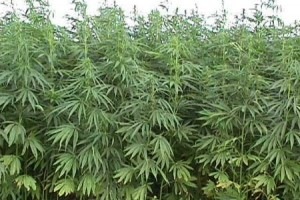
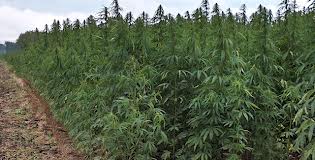
Marijuana is a short, bushy plant with lots of leaves; industrial hemp is tall, with a thick stalk and few leaves.

When grown near each other, hemp and marijuana cross-pollinate, and the hemp destroys buds on the marijuana plants, he said. “Industrial hemp is an enemy of marijuana,” Comer said. “Law enforcement should be for industrial hemp.”

The long-dormant Industrial Hemp Commission, revived under Comer, has contracted with the University of Kentucky College of Agriculture to conduct an economic-impact study.

For the crop to be grown successfully, there has to be a market for the fibers, Comer said. “Many products we make from plastic, like car dashboards, armrests, carpet and fabrics, are made from hemp in other countries. Hemp is also used to make paper.”

Comer said one major benefit of growing hemp would be the manufacturing jobs created to produce items using hemp fibers, seed and oil.

“The United States is the only industrial country in the world that doesn’t allow industrial hemp to be grown, yet many products Americans buy have hemp as an ingredient,” he said. Hemp is legally grown in Canada and China, and throughout Europe.

If the General Assembly approves growing industrial hemp, the federal government would have to lift restrictions before it could be grown. “I want us to be ready when the federal government gives the go-ahead. I’m convinced they’re going to do that,” Comer said.

Beverly Fortune: (859) 231-3251. Twitter: @BFortune2010.

Read more here: http://www.kentucky.com/2013/01/03/2463466/state-agriculture-commissioner.html#storylink=cpy

Categories: US Hemp Co Museum | Tags: , , , , , , , | 1 Comment

Studying Marijuana and Its Loftier Purpose

Tikkun Olam, a medical marijuana farm in Israel, blends the high-tech and the spiritual.

By ISABEL KERSHNER
Published: January 1, 2013


SAFED, Israel — Among the rows of plants growing at a government-approved medical marijuana farm in the Galilee hills in northern Israel, one strain is said to have the strongest psychoactive effect of any cannabis in the world. Another, rich in anti-inflammatory properties, will not get you high at all.

Marijuana is illegal in Israel, but farms like this one, at a secret location near the city of Safed, are at the cutting edge of the debate on the legality, benefits and risks of medicinal cannabis. Its staff members wear white lab coats, its growing facilities are fitted with state-of-the-art equipment for controlling light and humidity, and its grounds are protected by security cameras and guards.

But in addition to the high-tech atmosphere, there is a spiritual one. The plantation, Israel’s largest and most established medical marijuana farm — and now a thriving commercial enterprise — is imbued with a higher sense of purpose, reflected by the aura of Safed, an age-old center of Jewish mysticism, as well as by its name, Tikkun Olam, a reference to the Jewish concept of repairing or healing the world.

There is an on-site synagogue in a trailer, a sweet aroma of freshly harvested cannabis that infuses the atmosphere and, halfway up a wooded hillside overlooking the farm, a blue-domed tomb of a rabbinic sage and his wife.

In the United States, medical marijuana programs exist in 18 states but remain illegal under federal law. In Israel, the law defines marijuana as an illegal and dangerous drug, and there is still no legislation regulating its use for medicinal purposes.

Yet Israel’s Ministry of Health issues special licenses that allow thousands of patients to receive medical marijuana, and some government officials are now promoting the country’s advances in the field as an example of its pioneering and innovation.

“I hope we will overcome the legal obstacles for Tikkun Olam and other companies,” Yuli Edelstein, the minister of public diplomacy and diaspora affairs, told journalists during a recent government-sponsored tour of the farm, part of Israel’s effort to brand itself as something beyond a conflict zone. In addition to helping the sick, he said, the effort “could be helpful for explaining what we are about in this country.”

Israelis have been at the vanguard of research into the medicinal properties of cannabis for decades.

In the 1960s, Prof. Raphael Mechoulam and his colleague Yechiel Gaoni at the Weizmann Institute of Science isolated, analyzed and synthesized the main psychoactive ingredient in the cannabis plant, tetrahydrocannabinol, or THC. Later, Professor Mechoulam deciphered the cannabinoids native to the brain. Ruth Gallily, a professor emerita of immunology at the Hebrew University of Jerusalem, has studied another main constituent of cannabis — cannabidiol, or CBD — considered a powerful anti-inflammatory and anti-anxiety agent.

When Zach Klein, a former filmmaker, made a documentary on medical marijuana that was broadcast on Israeli television in 2009, about 400 Israelis were licensed to receive the substance. Today, the number has risen to about 11,000.

Mr. Klein became devoted to the subject and went to work for Tikkun Olam in research and development. “Cannabis was used as medicine for centuries,” he said. “Now science is telling us how it works.”

Israeli researchers say cannabis can be beneficial for a variety of illnesses and conditions, from helping cancer patients relieve pain and ease loss of appetite to improving the quality of life for people with post-traumatic stress disorder and neuropsychological conditions. The natural ingredients in the plant, they say, can help with digestive function, infections and recovery after a heart attack.

The marijuana harvest, from plants that can grow over six feet tall, is processed into bags of flowers and ready-rolled cigarettes. There are also cannabis-laced cakes, cookies, candy, gum, honey, ointments and oil drops. The strain known as Eran Almog, which has the highest concentration of THC, is recommended for severe pain. Avidekel, a strain rich in CBD and with hardly any psychoactive ingredient, allows patients to benefit from the drug while being able to drive and to function at work.

Working with Hebrew University researchers, the farm has also developed a version in capsule form, which would make exporting the drug more practical, should the law allow it.

CONTINUE READING PAGE 2….

Categories: US Hemp Co Museum | Tags: , , , , , | Leave a comment

Ky. hemp supporters gain big endorsement

Published: January 20, 2013

By BRUCE SCHREINER — Associated Press

LOUISVILLE, Ky. — Industrial hemp’s repositioning toward mainstream status gained ground with a timely endorsement from the Kentucky Chamber of Commerce. But the plant’s proponents have more work to do in cultivating support to legalize a crop that once was a Bluegrass state staple.


http://3.bp.blogspot.com/-h8gfyIbtXGM/UAx1yxp4kjI/AAAAAAAAAoU/bG5ez3J9ZJE/s1600/Hemp+-+Kentucky+Hemp+Coalition.jpg


The chamber said recently that provided there’s adequate regulatory oversight, it supports legislation to position Kentucky as a leader in the production and commercialization of industrial hemp. The position was hailed by hemp backers, noting the chamber’s political clout.

“When Kentucky’s leading voice for small businesses and economic development endorses a piece of legislation, lawmakers sit up and listen,” said state Agriculture Commissioner James Comer, a former state lawmaker.

Comer is leading the comeback campaign for the versatile crop outlawed for decades due to its association with its cousin, marijuana. Hemp has a negligible content of THC, the psychoactive compound that gives marijuana users a high.

Comer, a farmer himself, touts hemp’s potential while crisscrossing the state, saying Kentucky can become a hub of hemp production and manufacturing. The crop can be turned into paper, clothing, food, biofuel, lotions and other products.

“We could be the Silicon Valley of industrial hemp manufacturing right here in Kentucky,” Comer said recently.

Bills aimed at legalizing the crop have been introduced in the Kentucky House and Senate, and lawmakers are expected to debate the issue when they return to the State Capitol in Frankfort next month to resume the 2013 session.

But hemp backers acknowledge challenges remain, namely resistance from Kentucky State Police. And that opposition could have a spillover effect with lawmakers hesitant to oppose the state’s top law enforcement agency.

State Police Commissioner Rodney Brewer last month restated the agency’s opposition, saying law enforcement may have difficulty distinguishing between hemp and marijuana.

Comer met with Brewer following a meeting of the Kentucky Industrial Hemp Commission late last year, but the commissioner said they’ve had no follow-up discussions. Comer said he’d like to have state police support but sees the agency’s resistance as a “non-factor.”

“I was a state representative for 11 years and very few bills ever passed without somebody being opposed to them,” he said.

Republican Sen. Paul Hornback of Shelbyville, lead sponsor of one of the hemp bills, said state police opposition will be an obstacle. But he said the state chamber’s support for legalizing the crop helps reshape the crop’s image.

“Everybody has to feel comfortable with the bill,” said Hornback, a tobacco farmer who once was lukewarm to hemp. “With the stature that the state chamber has, I think it does legitimize it. It brings credibility to the issue.”

Supporters say there’s a ready-made market for hemp, pointing to industry estimates that U.S. retail sales of hemp products exceed $400 million. Hemp is grown legally in Canada and many other countries, and imports into the U.S. include finished hemp products.

At least a couple of Kentucky companies – a tobacco processor and a seed supplier – have expressed interest in branching out into hemp. Hemp supporters say that could lead to jobs, especially in rural areas.

But the resistance of state police could be a sticking point for some lawmakers, including the top House leader.

“It will be difficult to pass any legislation that doesn’t have the support of the Kentucky State Police and Kentucky’s law enforcement community,” said House Speaker Greg Stumbo, D-Prestonsburg. “As long as they have reservations, I have reservations.”

Another potentially key player in the debate, Rep. Tom McKee, D-Cynthiana, said the biggest impediments to hemp’s comeback are the federal ban on hemp and the concerns of state police.

But McKee, chairman of the House Agriculture and Small Business Committee, hasn’t yet staked out a position on the issue.

“We don’t want to close a door on any viable agricultural crop that is profitable and would be well-accepted,” he said.

Under Hornback’s bill, hemp growers would need licenses, and applicants would have to pass criminal background checks.

U.S. Sen. Rand Paul said he would seek a waiver from the federal ban on hemp for Kentucky if state lawmakers vote to legalize the crop. Paul also has pushed for federal legislation to remove restrictions on hemp cultivation. The Kentucky Republican said hemp supporters need to persuade law enforcement skeptics that the crop “won’t make the drug problem worse.”

“We live in a modern world where we have GPS,” he said in a recent speech in Frankfort. “Couldn’t a farmer or anybody who wants to grow it just get a simple one-page permit and say these are my GPS coordinates where it’s being grown and it could be checked?”

As for Comer, the agriculture commissioner has said he won’t defy the federal government on the issue.

The crop hasn’t been grown in the U.S. since the 1950s. Kentucky once was a leading producer of industrial hemp. During World War II, the U.S. government encouraged farmers to grow hemp for the war effort because other industrial fibers, often imported from overseas, were in short supply.

Because it can thrive in small, sloping plots, Comer said hemp could be a viable crop on marginal land in central and eastern Kentucky.

“A decade from now, someone will look back and think, ‘You mean there were people opposed to growing industrial hemp?’” he said.

Read more here: http://www.kentucky.com/2013/01/20/2483327/hemp-supporters-gain-big-endorsement.html#storylink=cpy

Categories: US Hemp Co Museum | Tags: , , , | Leave a comment

Effort to legalize hemp gains new life in Kentucky


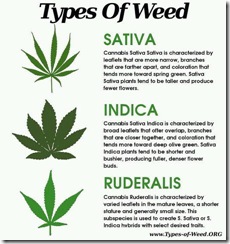
3 types cannabis


Gregory A. Hall, The (Louisville, Ky.) Courier-Journal

FRANKFORT, Ky. — With support from some of the state’s top politicians and claims that it would create thousands of jobs, an effort to legalize industrial hemp — the less-potent cousin of marijuana — may have its best chance of passing the Kentucky General Assembly.

Opposition from the Kentucky State Police helped kill earlier efforts to legalize hemp, which can be processed into fiber for clothing or provide an oil used in skin- and hair-care products. Once legal, hemp production in the United States was centered in Kentucky. Production fell nationally after the mid-1800s, as cotton surged.

State police still oppose legalizing hemp, arguing in part that because the plants look virtually the same as marijuana it could impede drug enforcement efforts.

But the proposal to legalize hemp has gained momentum from the alliance of Kentucky Agriculture Commissioner James Comer, state Senate Agriculture Committee Chairman Paul Hornback, U.S. Sen. Rand Paul and the Kentucky Chamber of Commerce.

“This is something that you don’t have to borrow any money (for) that will have an immediate impact of thousands of jobs,” Comer said, based on an assumption that processors and manufacturers would locate in Kentucky if it is one of the first states to approve it. “We’re ahead at something that relates to economic development for once, so let’s pursue it.”

Comer and Paul say the state police concerns are unfounded because growers of industrial hemp would be licensed and global-positioning system devices would identify legal crops and reveal others as illegal.

Comer’s Senate Bill 50, sponsored by Hornback, a Republican from Shelbyville, was filed earlier this month just before the legislature adjourned until February.

The bill would require growers to be licensed annually and have their backgrounds checked by the Agriculture Department. Each licensee would be required to plant a minimum of 10 acres to eliminate people who aren’t serious from getting licenses.

Growers would have to keep sales contracts for three years and provide names of hemp buyers to the department.

Hemp seeds produce plants with less than 1 percent THC, the active ingredient in marijuana, which has between 3 percent and 15 percent THC.

Comer said he believes there are 22 votes in the 38-member Senate in favor of the bill. But if it isn’t assigned to Hornback’s committee by Senate President Robert Stivers and other Senate leaders, it may never get to the floor.

“I’m afraid I see problems in the Senate,” Comer said.

Stivers, a Republican from Manchester, said some members are uncomfortable with the bill.

If the measure passes the Senate, it likely will face an even tougher battle in the House, where Agriculture Committee Chairman Tom McKee, a Democrat from Cynthiana, has blocked similar bills from getting a vote in the past

McKee has said the state police concerns resonate with him.

“I think we have some questions to answer, but I certainly don’t want to close any opportunity for viable agriculture,” McKee said earlier this month.

Gov. Steve Beshear said on a Lexington radio call-in show recently that his “only hesitation” is law enforcement concerns.

Even if an industrial hemp bill passed in Kentucky, it would still need federal approval. Federal drug policy effectively bans growing it, although other countries, such as Canada, allow it.

Paul, a Bowling Green Republican, has supported federal legislation to enable hemp production by classifying it separately from marijuana. Paul and Comer appeared together at the Kentucky State Fair last year to talk about their support for industrial hemp.

If legalized, Comer said he doesn’t see corn and soybean growers in Western Kentucky switching to industrial hemp, but he said it would be a profitable alternative for growers in hillier areas whose land is now used for grazing and pasture.

CONTINUE READING…

Categories: US Hemp Co Museum | Tags: , | Leave a comment

Atmospheric Oxygen Levels Are Dropping Faster Than Atmospheric Carbon Levels Are Rising

Posted by Good German on January 27, 2013

http://upload.wikimedia.org/wikipedia/commons/thumb/c/c7/Earth6391.jpg/128px-Earth6391.jpg


Forget rising temperatures and bigger storms, this is the big problem that neither side of the mainstream debate over environmental destruction is talking about.  Peter Tatchell reported for the Guardian back in 2008:

The rise in carbon dioxide emissions is big news. It is prompting action to reverse global warming. But little or no attention is being paid to the long-term fall in oxygen concentrations and its knock-on effects.

Compared to prehistoric times, the level of oxygen in the earth’s atmosphere has declined by over a third and in polluted cities the decline may be more than 50%. This change in the makeup of the air we breathe has potentially serious implications for our health. Indeed, it could ultimately threaten the survival of human life on earth, according to Roddy Newman, who is drafting a new book, The Oxygen Crisis.

I am not a scientist, but this seems a reasonable concern. It is a possibility that we should examine and assess. So, what’s the evidence?

Around 10,000 years ago, the planet’s forest cover was at least twice what it is today, which means that forests are now emitting only half the amount of oxygen.

Desertification and deforestation are rapidly accelerating this long-term loss of oxygen sources.

The story at sea is much the same. Nasa reports that in the north Pacific ocean oxygen-producing phytoplankton concentrations are 30% lower today, compared to the 1980s. This is a huge drop in just three decades.

Moreover, the UN environment programme confirmed in 2004 that there were nearly 150 “dead zones” in the world’s oceans where discharged sewage and industrial waste, farm fertiliser run-off and other pollutants have reduced oxygen levels to such an extent that most or all sea creatures can no longer live there. This oxygen starvation is reducing regional fish stocks and diminishing the food supplies of populations that are dependent on fishing. It also causes genetic mutations and hormonal changes that can affect the reproductive capacity of sea life, which could further diminish global fish supplies.

Professor Robert Berner of Yale University has researched oxygen levels in prehistoric times by chemically analysing air bubbles trapped in fossilised tree amber. He suggests that humans breathed a much more oxygen-rich air 10,000 years ago.

Further back, the oxygen levels were even greater. Robert Sloan has listed the percentage of oxygen in samples of dinosaur-era amber as: 28% (130m years ago), 29% (115m years ago), 35% (95m years ago), 33% (88m years ago), 35% (75m years ago), 35% (70m years ago), 35% (68m years ago), 31% (65.2m years ago), and 29% (65m years ago).

Professor Ian Plimer of Adelaide University and Professor Jon Harrison of the University of Arizona concur. Like most other scientists they accept that oxygen levels in the atmosphere in prehistoric times averaged around 30% to 35%, compared to only 21% today – and that the levels are even less in densely populated, polluted city centres and industrial complexes, perhaps only 15 % or lower.

Much of this recent, accelerated change is down to human activity, notably the industrial revolution and the burning of fossil fuels. The Professor of Geological Sciences at Notre Dame University in Indiana, J Keith Rigby, was quoted in 1993-1994 as saying:

In the 20th century, humanity has pumped increasing amounts of carbon dioxide into the atmosphere by burning the carbon stored in coal, petroleum and natural gas. In the process, we’ve also been consuming oxygen and destroying plant life – cutting down forests at an alarming rate and thereby short-circuiting the cycle’s natural rebound. We’re artificially slowing down one process and speeding up another, forcing a change in the atmosphere.

Very interesting. But does this decline in oxygen matter? Are there any practical consequences that we ought to be concerned about? What is the effect of lower oxygen levels on the human body? Does it disrupt and impair our immune systems and therefore make us more prone to cancer and degenerative diseases?

The effects of long term oxygen deprivation on the brain, called cerebral hypoxia, are known and some sound reminiscent of the general rise of stupidity in the industrialized world.

Professor Ervin Laszlo (quoted in Tatchell’s article) writes:

Evidence from prehistoric times indicates that the oxygen content of pristine nature was above the 21% of total volume that it is today. It has decreased in recent times due mainly to the burning of coal in the middle of the last century. Currently the oxygen content of the Earth’s atmosphere dips to 19% over impacted areas, and it is down to 12 to 17% over the major cities. At these levels it is difficult for people to get sufficient oxygen to maintain bodily health: it takes a proper intake of oxygen to keep body cells and organs, and the entire immune system, functioning at full efficiency. At the levels we have reached today cancers and other degenerative diseases are likely to develop. And at 6 to 7% life can no longer be sustained.

More specific details regarding the drop in atmospheric oxygen can be found here.

Related Posts with Thumbnails

Categories: US Hemp Co Museum | Tags: , , , , , , , | Leave a comment

The Latest Hemp news in Kentucky…


Kentucky state senator to bring hemp bill up for vote

  • By The Associated Press
  • Posted January 28, 2013 at 3:13 p.m.

FRANKFORT, Ky. — The chairman of the Senate Agriculture Committee sounded upbeat Monday about prospects for his bill that would regulate industrial hemp production in Kentucky if the federal government lifts its decades-long ban on the crop that once was a Bluegrass state staple.

Republican Sen. Paul Hornback of Shelbyville said Monday he intends to bring the hemp bill up for a vote in his committee, which is expected to review the legislation at a Feb. 11 hearing. Hemp proponent U.S. Sen. Rand Paul is scheduled to appear at the hearing and put his political weight behind the measure.

CONTINUE READING…


Don’t call it a ‘Weed;’ Momentum for hemp in Ky

by Joe Arnold

WHAS11.com

Posted on January 28, 2013 at 8:07 AM

Updated yesterday at 10:38 AM

FRANKFORT, Ky (WHAS11) — Reinvigorated after a ten year dormancy, Kentucky’s Industrial Hemp Commission meets Monday morning with an apparent new momentum.
The effort recently gained the endorsement of the Kentucky Chamber of Commerce and bills that would legalize the crop are expected to be debated when the General Assembly’s “short session” resumes in February. 
Sen. Paul Hornback (R-Shelbyville), a sponsor of one of the bills (SB50) and a statutory member of the commission, is scheduled to attend.

CONTINUE READING…


Kentucky Narcotic Officer’s Association: No to Legalizing Hemp

By Kevin Willis

The recent talk in Frankfort about legalizing industrial hemp hasn’t convinced the head of the Kentucky Narcotic Officer’s Association. Tommy Loving, who also leads the Warren County Drug Task, says he fears marijuana growers will plant their crops next to hemp, making it difficult for law enforcement to distinguish between the two.

Some agriculture experts say planting the two crops together would destroy the potency of the marijuana over time, but Loving told WKU Public Radio that wouldn’t deter those looking to hide from law enforcement.

“If you plant marijuana with hemp surrounding it, for instance, in one growing season, you’re not going to diminish that much of the THC content in the marijuana. So your marijuana crop is still going to be a sellable commodity,” said Loving.

CONTINUE READING…


KSP: Hemp backers ‘naive’ after endorsing Senate bill

by Joe Arnold

WHAS11.com

Posted on January 28, 2013 at 4:32 PM

Updated today at 8:20 AM

FRANKFORT, Ky (WHAS11) — With momentum building for an effort to license hemp farming in Kentucky, law enforcement leaders lashed out on Monday, saying hemp’s supporters are looking at the issue “through rose-colored glasses.”
The pushback came as Kentucky’s Industrial Hemp Commission met at the Agriculture Commissioner’s offices and voted to endorse Senate hemp legislation. 
All three representatives of law enforcement on the commission were absent, including Operation UNITE’s Dan Smoot who joined in the news release from the Kentucky Narcotic Officers’ Association in opposition to Senate Bill 50 and House Bill 33.

CONTINUE READING…

Categories: US Hemp Co Museum | Tags: , , , , , , | Leave a comment