 Eighty years ago, on October 2, 1937, House Bill 6385: The Marihuana Tax Act was enacted as law. The Act for the first time imposed federal criminal penalties on activities specific to the possession, production, and sale of cannabis – thus ushering in the modern era of federal prohibition.
“The ongoing enforcement of marijuana prohibition financially burdens taxpayers, encroaches upon civil liberties, engenders disrespect for the law, and disproportionately impacts young people and communities of color,” said NORML Executive Director Erik Altieri, “It makes no sense from a public health perspective, a fiscal perspective, or a moral perspective to perpetuate the prosecution and stigmatization of those adults who choose to responsibly consume a substance that is safer than either alcohol or tobacco.”
Congress held only two hearings to debate the merits of the Marihuana Tax Act, which largely consisted of sensational testimony by the Federal Bureau of Narcotics Director Harry Anslinger. He asserted before the House Ways and Means Committee, “This drug is entirely the monster Hyde, the harmful effect of which cannot be measured.” His ideological testimony was countered by the American Medical Association, whose legislative counsel Dr. William C. Woodward argued that hard evidence in support of Anslinger’s hyperbolic claims was non-existent.
Woodward testified: “We are told that the use of marijuana causes crime. But yet no one has been produced from the Bureau of Prisons to show the number of prisoners who have been found addicted to the marijuana habit. … You have been told that school children are great users of marijuana cigarettes. No one has been summoned from the Children’s Bureau to show the nature and extent of the habit among children. Inquiry of the Children’s Bureau shows that they have had no occasion to investigate it and know nothing particularly of it.” He further contended that passage of the Act would severely hamper physicians’ ability to prescribe cannabis as a medicine.
Absent further debate, members of Congress readily approved the bill, which President Franklin Roosevelt promptly signed into law on August 2, 1937. The ramifications of the law became apparent over the ensuing decades. Physicians ceased prescribing cannabis as a therapeutic remedy and the substance was ultimately removed from the US pharmacopeia in 1942. United States hemp cultivation also ended (although the industry was provided a short-lived reprieve during World War II). Policy makers continued to exaggerate the supposed ill effects of cannabis, which Congress went on to classify alongside heroin in 1970 with the passage of the US Controlled Substances Act. Law enforcement then began routinely arresting marijuana consumers and sellers, fueling the racially disparate, mass incarceration epidemic we still face today.
Despite continued progress when it comes to legalizing or decriminalizing the adult use of marijuana, data from the recently released Uniform Crime Report from the FBI revealed that over 600,000 Americans were arrested for marijuana offenses in 2016.
After 80 years of failure, NORML contends that it is time for a common sense, evidence-based approach to cannabis policy in America.
“Despite nearly a century of criminal prohibition, the demand for marijuana is here to stay. America’s laws should reflect this reality and govern the cannabis market accordingly,” stated NORML Deputy Director Paul Armentano, “Policymakers ought to look to the future rather than to the past, and take appropriate actions to comport federal law with majority public opinion and the plant’s rapidly changing legal and cultural status.”

 Hugh Hefner, or “Hef” as he preferred to be called, played a crucial role in the early days of NORML. At a time when most Americans were accepting the government’s “reefer madness” propaganda, Hef, through the Playboy Foundation, provided NORML with our initial funding in early 1971, and became our primary funder all during the 1970s. And by focusing attention in Playboy magazine on some of the most egregious victims of the war against marijuana smokers, he helped us convince millions of Americans that marijuana prohibition was a misguided and destructive public policy.
 It’s time to exercise your civic duty and ensure that you are registered to vote!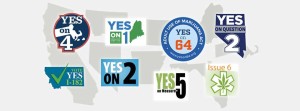
 What’s a medical marijuana card-holding college student to do when they are required to live in on-campus housing but their medicine is banned from the premises?

 In their second formal assessment on the impact of legalization in the wake of the implementation of I-502, the Washington State Institute for Public Policy (WSIPP) issued the next regularly scheduled report – and suffice to say, the news was very positive, unless you are still relying on tired and debunked prohibitionist talking points.