Georgia: Lawmakers Fail To Act on Senate Resolution That Would Have Placed Marijuana Question Before Voters

Senate lawmakers failed to act on Senate Resolution 6, which sought to place a constitutional amendment on the November 2016 ballot to regulate adult marijuana use, prior to a legislative deadline – thus tabling it for this session. 

NORML would like to thank those of you who took time to contact your state Senator and urged their support for this measure. 

If passed, SR6 would have allowed voters to decide if they wish to regulate the commercial cultivation, processing, and retail of marijuana to adults over the age of 21. You can read the full text of this proposal here.

Additional information regarding this and other pending marijuana law reform legislation is available by contacting Peachtree NORML. Follow them on Facebook here.

National Organization for the Reform of Marijuana Laws – Advocacy Campaigns

Categories: Industrial Hemp Legislation | Tags: , , , , , , , , , , | Leave a comment

Hawaii: Lawmakers Fail To Act On Marijuana Legalization Measure

Members of the House Judiciary Committee failed to act on legislation to permit adults to legally possess and cultivate personal use amounts of marijuana before the 2016 legislative session came to a close. 

Senate Bill 873  sought to amend the criminal code to remove criminal penalties specific to the possession and cultivation of marijuana for personal use by those age 21 or older. 

2016 was the final year in a two year session so this marks the end of consideration for this piece of legislation. 
 
According to an analysis of 2010 marijuana arrests data, Hawaii police make some 1,500 marijuana possession arrests annually. Minor marijuana possession offenders, many of them young people, should not be saddled with a criminal record and the lifelong penalties and stigma associated with it.
 
NORML would like to thank those of you who contacted your state lawmakers in support of this legislation. 

National Organization for the Reform of Marijuana Laws – Advocacy Campaigns

Categories: Industrial Hemp Legislation | Tags: , , , , , | Leave a comment

New Hampshire: Lawmakers Table Legalization Measures

Lawmakers failed to consider two pieces of legislation related to the legalization of marijuana before the end of the 2016 legislative session.

HB 1610 and HB 1675 both sought to permit the personal cultivation and commercial retail sale of marijuana in the state.  Members of the House rejected a separate measure, HB 1694 in a floor vote on Thursday, February 11th. 

Police in New Hampshire arrest some 2,900 individuals annually for simple marijuana possession offenses. The continued criminalization of adult marijuana use is out-of-step with the views of New Hampshire adults, some 62 percent of whom now endorse legalizing and regulating the plant, according to a February 2016 WMUR Granite State Poll.
Despite more than 70 years of federal marijuana prohibition, Americans’ consumption of and demand for cannabis is here to stay. It is time for state lawmakers to acknowledge this reality. It is time to stop ceding control of the marijuana market to untaxed criminal enterprises and it is time for lawmakers to impose common-sense regulations governing cannabis’ personal use by adults and licensing its production.

NORML would like to thank those of you who contacted your state lawmakers in support of this legislation. 

National Organization for the Reform of Marijuana Laws – Advocacy Campaigns

Categories: Industrial Hemp Legislation | Tags: , , , , | Leave a comment

Tennessee: Cities Move To Reduce Marijuana Possession Penalties

Cannabis PenaltiesMembers of the Nashville metro council and the Memphis city council have given final approval to municipal legislation providing police the discretion to cite rather than arrest minor marijuana offenders.

Nashville city council members voted 35 to 3 in late September in favor of the new ordinance. It provides police the option of issuing $ 50 citations for those who possess up to a half-ounce of marijuana. By contrast, under state law, the possession of small amounts of cannabis is classified as a criminal misdemeanor, punishable by up to one year in jail and a criminal record.

The legislation now awaits action from the city’s mayor, who has pledged to sign the ordinance into law.

Members of the Memphis city council decided this week in favor of a similar measure by a 7 to 6 vote. For the better part of the past year, members of Memphis NORML have spent their time lobbying members of the Memphis city council in support of the policy change. However, the director of the Memphis Police Department remains opposed to the proposal and has indicated that he may instruct his officers to not immediately comply with the new ordinance.

Many other cities and counties in the southeastern region of the United States have recently enacted similar ordinances, including Miami-Dade county and West Palm Beach in Florida.

A Republican state lawmaker has threatened to limit funding to the two Tennessee cities if they enact the ordinances into law.

NORML Blog, Marijuana Law Reform

Categories: Hemp History | Tags: , , , , , , | Leave a comment

Missouri: Senate Fails To Vote On Industrial Hemp Measure

Members of the Senate failed to consider pending legislation, House Bill 2038, to expand the state’s industrial hemp research program, before the legislative session came to an end.

House Bill 2038 was previously approved by members of the House on April 11th, 2016 in a 123 to 29 vote

Other pending measures, House Bill 1973 and Senate Bill 584, also failed to garner support this session.

In 2014, lawmakers passed House Bill 2238 which permits the Department of Agriculture to licsense farmers to grow industrial hemp for research purposes. 

Hemp is a distinct variety of the plant species cannabis sativa L. that contains minimal amounts of tetrahydrocannabinol (THC), the primary psychoactive ingredient in marijuana. Various parts of the plant can be utilized in the making of textiles, paper, paints, clothing, plastics, cosmetics, foodstuffs, insulation, animal feed and other products. The crop is commercially cultivated throughout the world. 

NORML would like to thank those of you who contacted your state lawmakers in support of this legislation. 

National Organization for the Reform of Marijuana Laws – Advocacy Campaigns

Categories: Industrial Hemp Legislation | Tags: , , , , , , | Leave a comment

New Mexico: Lawmakers Fail To Consider Hemp Legislation

Legislation has been tabled, SB 3 and HB 148, to permit the state Department of Agriculture to license farmers to grow industrial hemp for “research and development purposes.”

Hemp is a distinct variety of the plant species cannabis sativa L. that contains minimal amounts of tetrahydrocannabinol (THC), the primary psychoactive ingredient in marijuana. Various parts of the plant can be utilized in the making of textiles, paper, paints, clothing, plastics, cosmetics, foodstuffs, insulation, animal feed and other products. The crop is commercially cultivated throughout the world. 

 
Members of Congress recently approved language (Section 7606) in the omnibus federal Farm Bill explicitly authorizing states to sponsor hemp research absent federal reclassification of the plant. Presently, 24 states have enacted legislation permitting licensed hemp cultivation in a manner that is compliant with this statute.
 
Despite this however, lawmakers in New Mexico failed to even consider pending hemp legislation. 

NORML would like to thank those of you who contacted your state elected officials in support of these measures. 


National Organization for the Reform of Marijuana Laws – Advocacy Campaigns

Categories: Industrial Hemp Legislation | Tags: , , , , , | Leave a comment

New Mexico: Senators Vote Down Cannabis Regulation

Members of the Senate voted down Senate Joint Resolution 5 which sought to put legalization before a public vote this November. Although 17 Senators stood in favor of the measure, 24 voted against it. 

However, the vote marks the first time that such a measure has ever been debated on the floor of either chamber of the New Mexico legislature.

In the House, lawmakers failed to take any action on House Bill 75, which sought to regulate the personal cultivation and retail sale of marijuana and hemp, and they never got a message from the Governor so it could not be heard in this short fiscal session.

NORML thanks those of you who took time to contact your elected officials in favor of regulating marijuana — a public policy position now supported by the majority of New Mexicans. While we didn’t win this particular fight this legislative session, we are continuing to gain momentum and to change minds.

We hope that you please continue to support marijuana law reform efforts in New Mexico.

National Organization for the Reform of Marijuana Laws – Advocacy Campaigns

Categories: Industrial Hemp Legislation | Tags: , , , , , | Leave a comment

Study: Medical Marijuana Laws Associated With Greater Workforce Participation Among Older Americans

oil_bottlesThe enactment of statewide medicinal cannabis programs is associated with greater participation in the workforce by adults age 50 and older, according to the findings of a working paper published by the National Bureau of Economic Research, a non-partisan think-tank.

Researchers at the John Hopkins School of Public Health in Baltimore and Temple University in Philadelphia analyzed two-decades of data from the Health and Retirement Study, a nationally representative panel survey of Americans over 50 and their spouses, to determine the impact of medical marijuana access laws on subjects’ health and workforce participation.

Authors reported, “[H]ealth improvements experienced by both groups (older men and women) permit increased participation in the labor market.” Specifically, investigators determined that the enactment of medical marijuana laws was associated with a “9.4 percent increase in the probability of employment and a 4.6 percent to 4.9 percent increase in hours worked per week” among those over the age of 50.

They concluded: “Medical marijuana law implementation leads to increases in labor supply among older adult men and women. … These effects should be considered as policymakers determine how best to regulate access to medical marijuana.”

Previous analysis of the impact of medical cannabis laws on various health and welfare outcomes report that legalization is associated with a reduction in obesity-related medical costs, decreased rates of opioid addiction and mortality, fewer workplace absences, and reduced Medicare costs.

Full text of the study, “The impact of medical marijuana laws on the labor supply and health of older adults: Evidence from the Health and Retirement Study,” appears online here.

NORML Blog, Marijuana Law Reform

Categories: Hemp History | Tags: , , , , , , , , , , | Leave a comment

Marijuana Smoking Up, Marijuana Arrests Down

C1_8734_r_xIt’s a great time to be alive if you are a marijuana smoker. We are finally working our way out of the shadows of prohibition and into the mainstream. Following the reign of terror that resulted in more than 25 million Americans being arrested on marijuana charges since 1937, the country is at last looking for a better alternative.

Fewer marijuana smokers are being arrested.

Officer arresting someone breaking the lawFlickr/Oregon Dept. of Transportation – flic.kr

First, and most important, fewer and fewer states continue to treat responsible marijuana smokers like criminals. Seventeen states have decriminalized the personal use of marijuana, and four states and the District of Columbia have legalized recreational use. With each new state that moves in our direction, the number of marijuana arrests continues to decline.

The latest marijuana arrest data released this week by the FBI show that 643,122 Americans were arrested on marijuana charges in 2015, with 89 percent of those arrests for marijuana possession only, not for cultivation or trafficking. While that number remains far too high — that’s a lot of individuals having their lives and careers disrupted unfairly over their use of marijuana — it is the lowest number of marijuana arrests reported since 1996. And it represents nearly a 25 percent reduction in arrests since the peak (almost 800,000 arrests) was reached in 2007.

“Enforcing marijuana laws costs us about $ 3.6 billion a year, yet the War on Marijuana has failed to diminish the use or availability of marijuana,” according to the ACLU’s 2013 report on marijuana arrests.

With five states scheduled to vote on full legalization this November, marijuana arrest rates are expected to continue to decline further in the coming years. We clearly still have lots of work to do, but the trend is all in our direction, and the pace appears to be accelerating.

More Americans are smoking marijuana.

woman-smoking-marijuana-joint

Second, marijuana smoking continues to become more mainstream culturally, with more and more adult Americans smoking each year. Instead of being ostracized and marginalized, marijuana smokers today are being embraced by the larger culture. For most Americans today, smoking marijuana is simply no big deal.

About 30 million Americans smoked marijuana over the past year, more than double the number of smokers in 2002, and 69 percent of the country now are aware that alcohol is more dangerous than marijuana, according to the National Institute on Alcohol Abuse and Alcoholism.

One in eight Americans (13 percent) now reports that they currently smoke marijuana, according to a recent Gallup poll. That’s nearly double the number of current users (7 percent) found by Gallup just three years earlier, with 43 percent of Americans acknowledging they have tried marijuana at some point in their lives. One in five adults under 30 years of age is now a pot smoker.
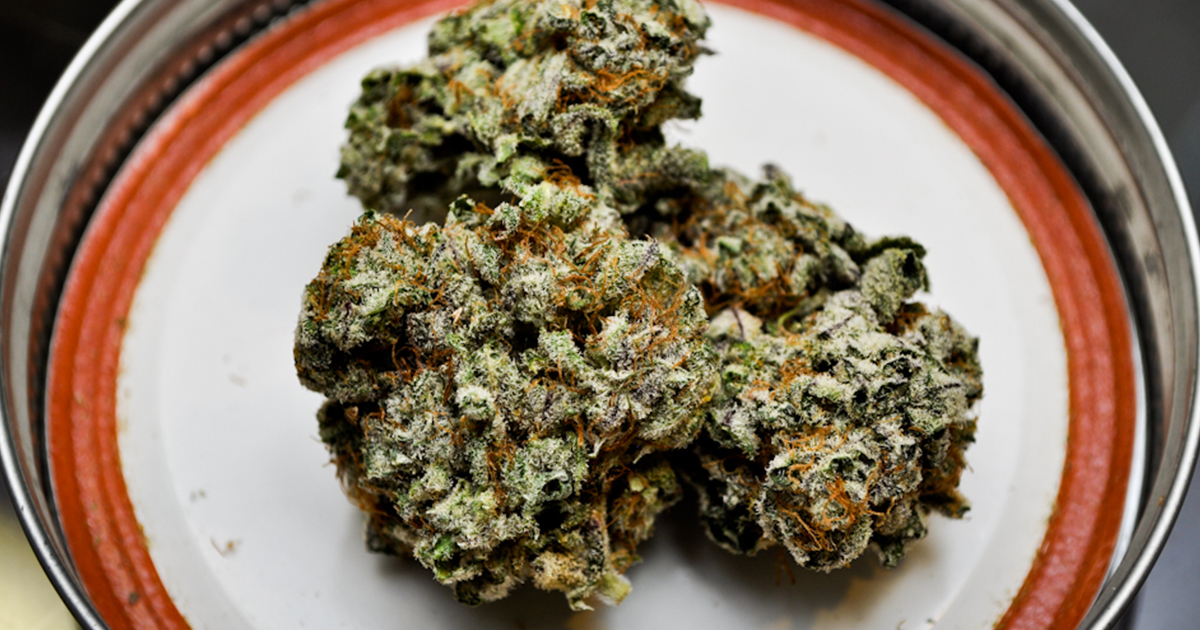
marijuanaFlickr/Dank Depot – flickr.com

And yet the number of adolescent marijuana smokers has not increased over the last decade, and adolescents tell us that marijuana is becoming less available to them than in prior years. The percentage of respondents aged 12-17 years who perceived marijuana to be “fairly easy or very easy to obtain” fell by 13 percent between 2002 and 2014, researchers at the CDC reported. Regulation with age controls is clearly more effective than prohibition.

As marijuana smoking continues to gain popularity, it also gains respectability, with fewer and fewer Americans supporting marijuana prohibition. They are not necessarily pro-pot, but — just as the country learned with the failed attempt at alcohol prohibition in the 1920s and early ’30s — a majority of the public has concluded that prohibition is a failed public policy that causes far more harm than the use of marijuana itself. Roughly 60 percent of the public now supports ending prohibition and legalizing marijuana.

Among generations, the demographics are strongly pointing toward ending prohibition altogether. About 68 percent of Millennials say marijuana should be legal, and 50 percent of baby boomers favor legalization. Young Americans simply have no problem with marijuana and can’t understand why it was ever made illegal.

High quality marijuana is available today.
man-smoking-and-cannabisFlickr/fredodf, Bigstock/greg banks – flic.kr

Finally, high quality marijuana is available to most consumers today, regardless of where you live. The marijuana legalization movement is only incidentally about marijuana; it is really about personal freedom. The government has no business coming into our homes to know what books we read, what music we listen to, how we conduct ourselves in the bedroom, and whether we drink alcohol or smoke marijuana when we relax in the evening. It is simply none of their business.

If there were no marijuana to smoke, this movement would still be an interesting intellectual exercise, but it would not be a political movement that is changing fundamental values in our country. We have political power as a movement because we are part of a community, and our marijuana smoking helps define that community.

There was a time when marijuana smokers had to make a serious effort to find a source to obtain decent marijuana, and in many parts of the country, there was frequently a “marijuana drought” for a couple of months each fall, before the new crop was harvested, when there was simply no marijuana available for consumers to buy on the black market. During those years, most high quality marijuana was imported. Some came from Canada, some from Mexico (“Acapulco Gold”). There was ganja from Jamaica, “Thai stick” from Thailand, etc. Domestic marijuana during those years was considered “ditch weed” and only smoked as a last resort.

And because of the legal risks involved importing marijuana, the price sometimes put high quality marijuana out of reach for many consumers, even if available. It was largely a connoisseur’s market.

Then the “grow America” movement took off. With seeds imported primarily from Holland and Canada, domestic marijuana growers began to produce the finest marijuana in the world. That remains the case today. Anyone who has traveled to Amsterdam, for example, will find that most of the marijuana available in the famous coffee shops, while good, is simply not as strong as the marijuana available in most states today, either via the legally regulated market or on the black market.

We’re looking for basic fairness.

man-smoking-joint-and-jointFlickr/Heath Alseike, Flickr/Unai Mateo – flickr.com

We still have a great deal of work to do before responsible marijuana smokers are treated fairly: Job discrimination, child custody issues, and DUID are just three of the more important areas where smokers are still treated like second class citizens. And we need social clubs where we can legally socialize with our friends and others who also smoke marijuana, outside a private home.

But these reforms will come as we continue to come out of the closet and gain political strength and as more and more Americans accept the fact that we are just average Americans who work hard, raise families, pay taxes, and contribute to our communities in a positive manner. When we relax in the evening, just as tens of millions of Americans enjoy a beer or a glass of wine, tens of millions of us enjoy a joint.

Is this a great country or what?

_______________________________________________________________

This column first ran on ATTN.com.

http://www.attn.com/stories/11752/marijuana-smoking-increases-and-marijuana-arrests-decrease


NORML Blog, Marijuana Law Reform

Categories: Hemp History | Tags: , , , | Leave a comment

Adult Use Ballot Initiatives Leading In Latest Polls

Legalize marijuanaVoters favor legalizing the adult use of cannabis in the five states where the issue will appear on the ballot this Election Day. Here is a summary of the latest polling data.

ARIZONA: Half of Arizona voters intend to vote ‘yes’ in favor of Proposition 205: The Arizona Legalization and Regulation of Marijuana Act, according to an Arizona Republic/Morrison/Cronkite News poll. Forty percent of voters oppose the initiative. The Act allows adults age 21 and older to possess and to privately consume and grow limited amounts of marijuana (up to one ounce of marijuana flower, up to five grams of marijuana concentrate, and/or the harvest from up to six plants) and provides regulations for a retail cannabis marketplace.

CALIFORNIA: Numerous polls show strong support among Californians for Proposition 64: The Adult Use of Marijuana Act. In recent weeks, polling data compiled by the Public Policy Institute of California and the California Field Poll show the measure leading among voters by some 30 percentage points. Proposition 64 permits adults to legally grow (up to six plants) and possess personal use quantities of cannabis (up to one ounce of flower and/or up to eight grams of concentrate) while also licensing commercial cannabis production and retail sales. The measure prohibits localities from taking actions to infringe upon adults’ ability to possess and cultivate cannabis for non-commercial purposes. The initiative language specifies that it is not intended to “repeal, affect, restrict, or preempt … laws pertaining to the Compassionate Use Act of 1996.”

MAINE: Fifty-three percent of voters support Question 1: The Marijuana Legalization Act, according to a September UNH Survey Center poll. Only 38 percent of respondents oppose it. The Act authorizes adults to obtain up to two and one-half ounces of cannabis from licensed facilities. Adults can also cultivate up to six plants and possess the harvest from those plants.

MASSACHUSETTS: Voters back Question 4: The Regulation and Taxation of Marijuana Act by a margin of 53 percent to 40 percent, according to polling data released last week by WBZ-TV. The ballot measure permits adults to possess up to 10 ounces of cannabis and to grow up to six plants for non-commercial purposes. The measure also establishes regulations overseeing the commercial production and sale of the plant.

NEVADA: Question 2: The Nevada Marijuana Legalization Initiative leads among Nevada voters by a margin of 57 percent to 33 percent, according to Suffolk University polling data released last week. The initiative states, “The People of the State of Nevada find and declare that the use of marijuana should be legal for persons 21 years of age or older, and its cultivation and sale should be regulated similar to other businesses.”

For more information about these and other pending ballot initiatives, please see NORML’s Election 2016 page here.

NORML Blog, Marijuana Law Reform

Categories: Hemp History | Tags: , , , , , | Leave a comment